
 Decks
 Pools
 Stonework
 Outdoor Structures
 Outdoor Living
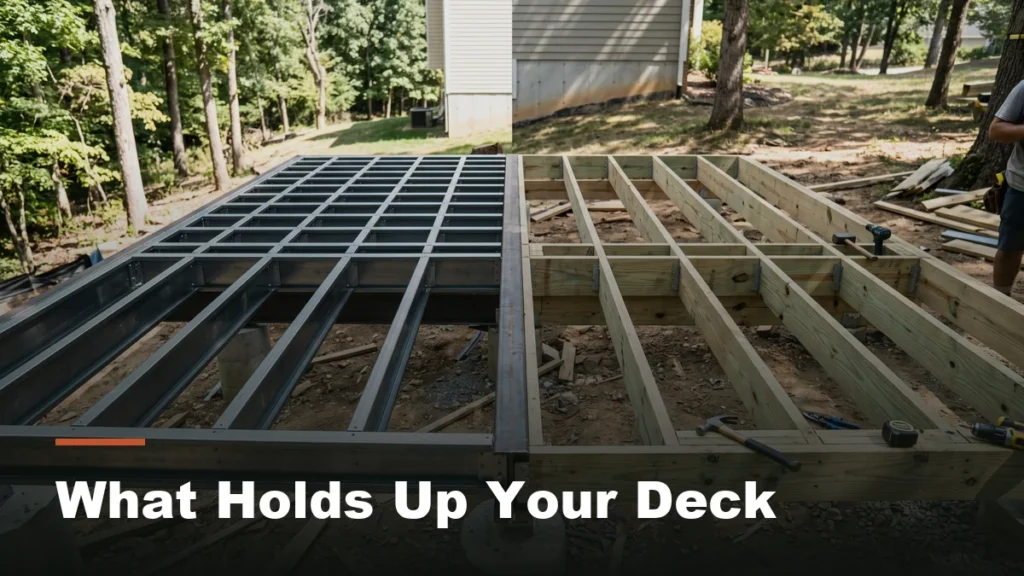
Most homeowners comparing deck boards spend their planning time on the surface: composite, PVC, or wood, and which colour. But the part of a deck that actually determines how the surface behaves over time is underneath it, out of sight, holding everything up. Steel framing vs pressure-treated joists is a substructure decision our steel-framed decks page covers at a basic level, and it matters more than most people realize once a composite deck board is sitting on top of it, because composite boards do not forgive a substructure that moves or holds moisture the way a wood board sometimes can.
This article goes further into what is actually happening under the boards: where moisture problems start, how steel framing and pressure-treated joists each hold up over time, and when pressure-treated wood framing is still the sensible, reasonable choice.
Where a composite deck actually fails first
A composite or PVC deck board is engineered to resist rot, so when a composite deck starts to feel soft, uneven, or squeaky years in, the board itself is rarely the cause. The joists underneath are doing the structural work, and if they are solid lumber, they are exposed to the same rain, snow melt, and humid Ontario summers as any other piece of untreated wood, just hidden from view under the decking. Steel framing removes that specific failure path, because steel does not rot the way wood can.
Did you know
Moisture problems in a wood-framed deck usually start where fasteners penetrate the joist, not across the whole board. Screw holes and nail penetrations create small openings where water can sit against end grain, which is part of why joist tape over the top of a wood joist has become a standard step in composite deck installation, covered below.
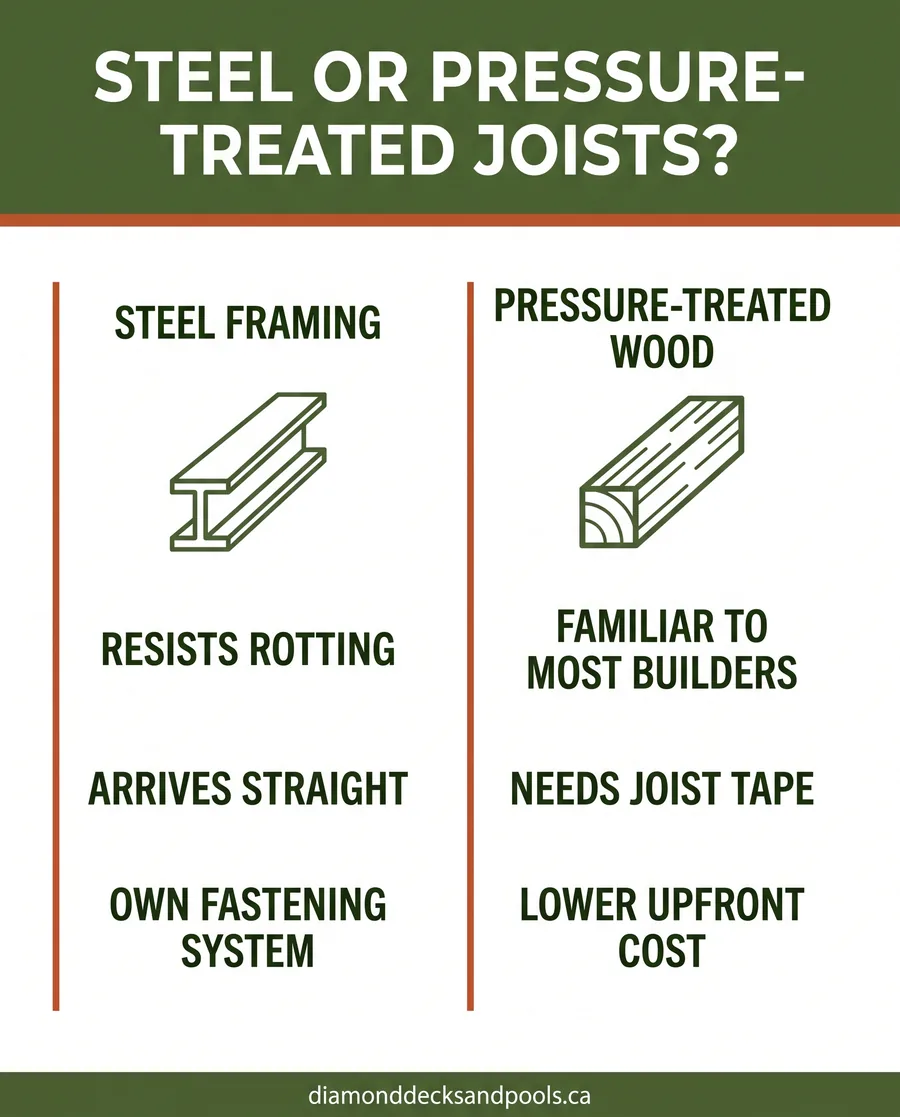
Steel framing vs pressure-treated joists
| Factor | Steel framing | Pressure-treated wood framing |
|---|---|---|
| Moisture and rot | Steel does not rot; corrosion resistance depends on the coating or galvanizing used | Rot-resistant when properly treated and detailed, but still wood, so joist tape and drainage details matter |
| Straightness | Manufactured joists and beams arrive straight from the factory | Solid lumber can warp, crown, or twist over time, which some installers plane or sort for |
| Fastening | Uses manufacturer-specific screws, brackets, and clip systems | Uses standard deck screws and joist hangers most contractors already stock |
| Fire behaviour | Non-combustible framing material | Combustible, like any wood-framed structure |
| Familiarity | A newer system; fewer installers have used it for years | The long-standing default; most deck contractors have built with it for decades |
| Upfront cost | Typically a premium over wood framing | Typically the lower-cost framing option |
None of these factors makes one system objectively better in every case. Steel framing versus pressure-treated joists comes down to a trade-off, and which side of that trade-off makes sense depends on your budget, your site, and how long you plan to own the property.
Moisture, joist tape, and fastening systems
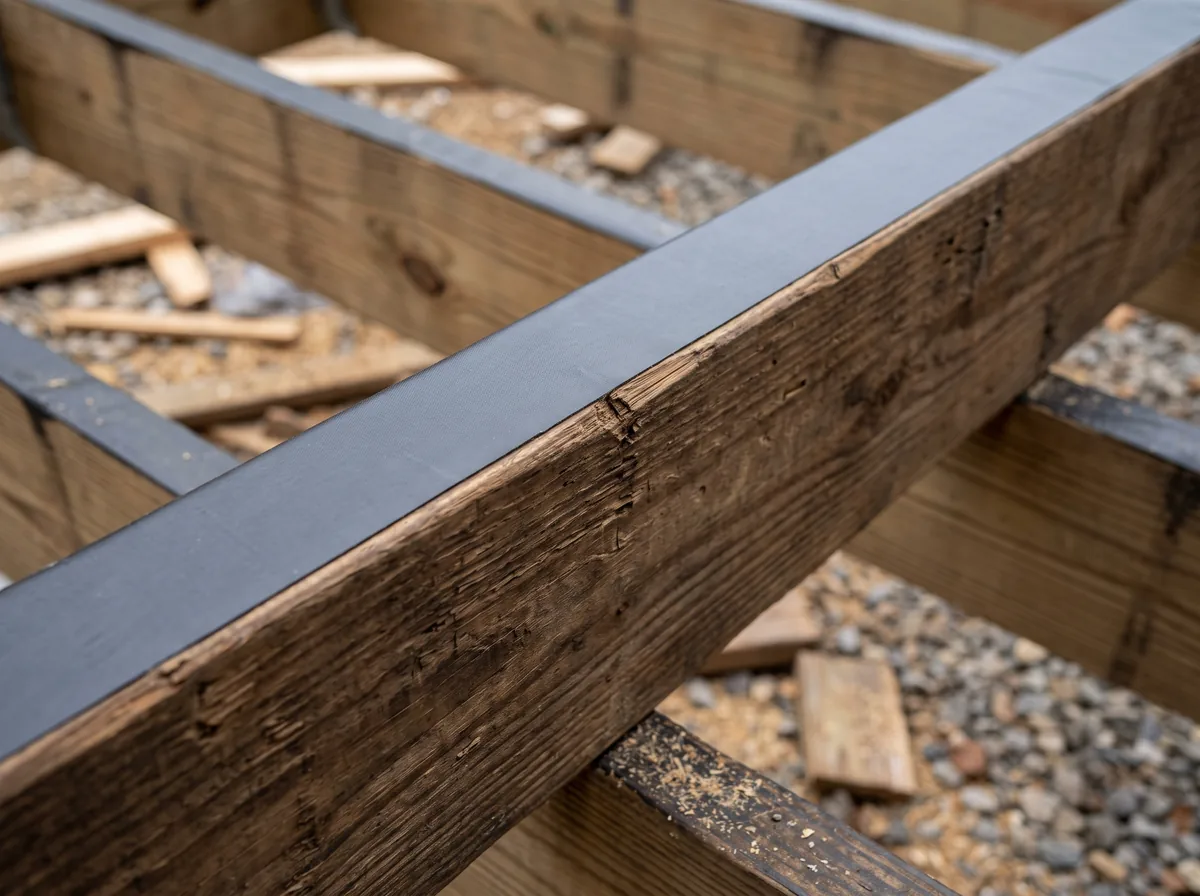
Composite decking manufacturers now widely recommend running a protective tape over the top of every wood joist and ledger board before the decking goes down. It is a small, inexpensive step that specifically targets the failure point described above.
Pro tip
If your framing is pressure-treated wood, ask your contractor whether joist tape is included in the quote, not assumed. It is a small line item that protects a part of the deck you will never see again once the boards go down.
Steel framing sidesteps the joist-tape question entirely, since there is no lumber top surface to protect, but it introduces its own fastening system. One manufacturer’s own installation guide describes its steel joists and beams as arriving straight and installing flat, avoiding the planing and straightening that twisted lumber sometimes needs. Fastening still has to follow that manufacturer’s own screws and connectors, not generic deck screws, which is worth knowing before you budget for hardware. That difference in fastening, more than anything else, is what a steel framing vs. pressure-treated joists quote prices out.
Flatness and fire considerations
A composite deck surface telegraphs whatever is happening underneath it. A joist that crowns, twists, or sags slightly over a season can show up as a subtle wave in the finished surface, something homeowners notice more with a rigid composite board than with a natural wood board that has more give. Manufactured steel components are produced to a consistent dimension and arrive straight, which is one reason some builders prefer it under a composite deck specifically, separate from the moisture question.
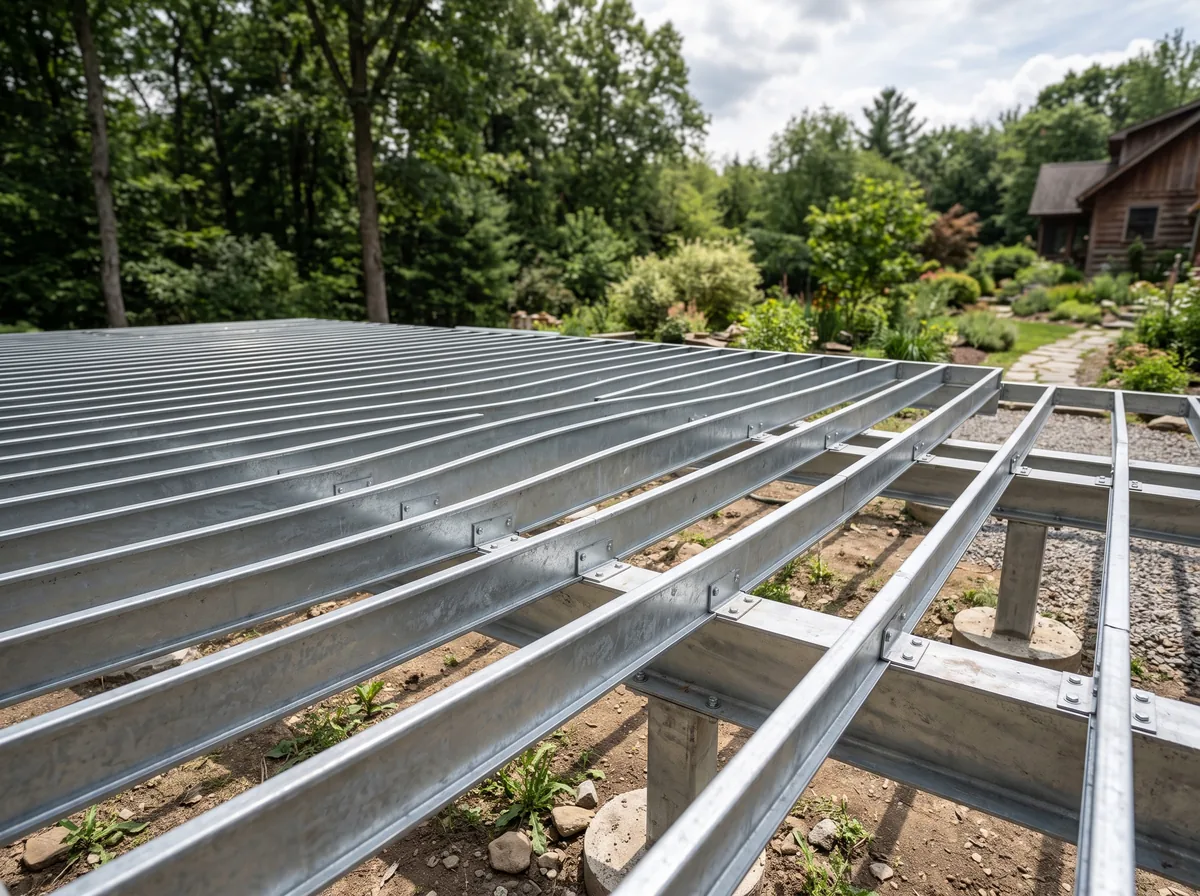
Steel is also a non-combustible framing material, where wood framing is combustible like any other wood structure. Whether that difference matters for your specific property is a conversation for your designer and, where relevant, your local building department, not a general rule that applies the same way to every backyard.
When pressure-treated wood is still the right call
Pressure-treated lumber remains a sound, well-understood choice for most backyard decks. Treatment in Canada is governed by the CSA O80 wood preservation standards, which set out the species, preservatives, and retention levels used for different applications, so a treated joist bought from a reputable supplier has already been produced to a recognized specification. Combined with joist tape at every fastener line and good drainage under the deck, a pressure-treated frame is a reasonable, budget-friendly choice for a typical backyard project.
Steel framing tends to earn its premium on decks with unusual spans, a very high or exposed site, or a homeowner who specifically wants to remove wood rot from the list of things to think about later. For most typical backyard projects, steel framing vs pressure-treated joists is less about one system being wrong and more about which trade-off fits your budget and your site. Ask your contractor to quote both, and compare them for your actual project rather than assuming one is automatically right.
Good to know
This article offers general information comparing steel and pressure-treated wood deck framing. It is not an engineering recommendation for your property. Span, spacing, fastening, and code requirements vary by site and design and should be confirmed with your contractor and, where applicable, your local building department.
Download the free quick guide
A quick-reference guide to what to ask about before choosing steel or pressure-treated joists for your next deck.
Frequently asked questions
Is steel framing always better than pressure-treated wood under a composite deck?
Not always. Steel removes rot as a failure path and tends to arrive straighter, which some homeowners specifically want under a rigid composite board, but it usually costs more upfront and uses its own manufacturer-specific fastening system rather than standard deck screws. Pressure-treated wood, detailed correctly with joist tape and good drainage, remains a reasonable and widely used choice for most backyard decks. The right answer depends on your budget, site conditions, and how long you plan to own the property.
What does joist tape actually do?
Joist tape is applied along the top of a wood joist or ledger board before the deck boards go down. It creates a barrier between the lumber and the fasteners and weather above it, targeting the specific spot, where a screw or nail penetrates the wood, where moisture problems tend to start first. It is a small step, but manufacturers of composite decking widely recommend it as part of a standard installation over a wood substructure.
Does steel framing rust?
Steel framing products sold for residential deck use are typically coated or galvanized specifically to resist corrosion outdoors, and manufacturers publish details of that coating for their own products. As with any outdoor steel product, the coating and how it is maintained matter more than the base material alone, so it is worth asking your contractor which system and finish they are quoting rather than assuming every steel framing product is identical.
Before you choose a framing system:
- Ask your contractor to quote both steel and pressure-treated framing for your specific project, not just one default option
- If you go with wood, confirm joist tape is included at every fastener line, not treated as an optional extra
- If you go with steel, ask which fastening and connector system the manufacturer requires, since it is specific to that product
Our team builds both steel and pressure-treated deck substructures across Barrie, Bradford, Innisfil, and the surrounding area. Get a free quote and we can walk through which framing makes sense for your backyard.
