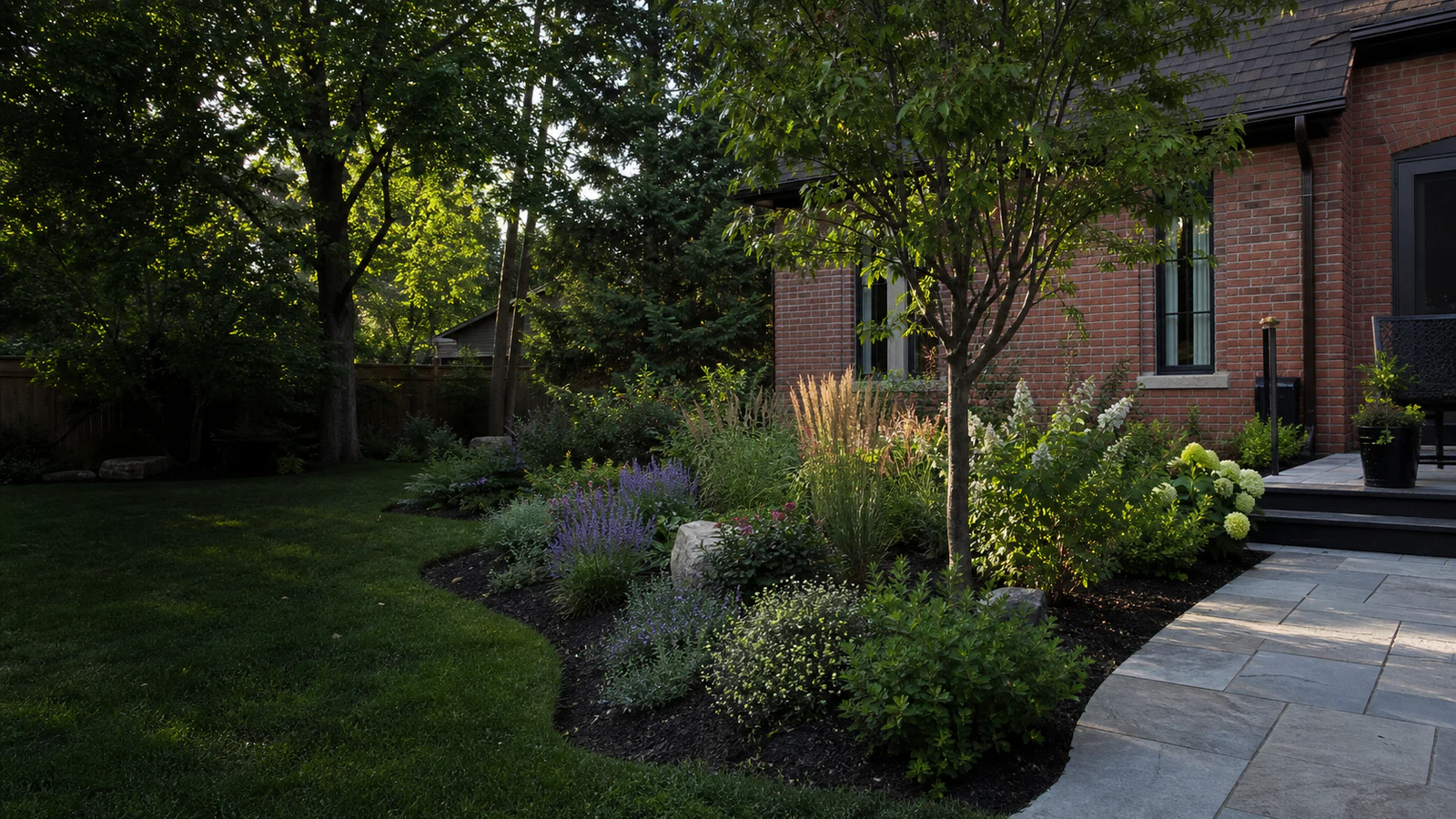
Layered garden planting with ornamental tree, shrubs, perennials and grasses at a Greater Toronto Area brick home

GARDEN DESIGN & PLANTING TORONTO & GTA

Garden Design and Planting That Gets Better as it Grows

Layered planting plans for Toronto and GTA homes, designed around light, soil, water, mature size, seasonal change, architecture, and the way the landscape is maintained.


Plan My Garden Explore Garden Details
wsib insured
licensed and insured
transparent pricing
built for ontario climate
10 year workmanship
5 star rated

DESIGN FOR YEAR FIVE, NOT JUST DAY ONE

A Garden is a Living Part of the Outdoor Plan

Fresh planting can look sparse on installation day and overcrowded a few seasons later if mature size was ignored. Good garden design anticipates growth, succession, shade, roots, pruning, and the way each bed will connect to the home and hardscape.

Diamond Decks & Pools designs planting as part of the complete property. We consider views from indoors, arrival, privacy, pool conditions, patios, decks, paths, drainage, downspouts, utilities, lighting, irrigation, snow, salt, and maintenance.

The palette can include native and climate-suitable trees, shrubs, perennials, grasses, and groundcovers selected for the actual light, soil, moisture, space, and design intent.

  • Right plant, right place: sun, shade, soil, moisture, exposure, and mature size matched
  • Four-season structure: branching, evergreens, seed heads, bark, and form considered beyond bloom time
  • Realistic care: establishment watering, mulch, pruning, division, cleanup, and replacement expectations discussed
Discuss My Garden
landscaping services toronto

WHAT A PLANTING PLAN ADDS

Structure, Change, and a Softer Outdoor Setting

Plants can screen, frame, cool, absorb, guide, and support seasonal life when they are given the right conditions.

PLANTING DESIGN

Conditions Choose the Plant List Before Colour Does

A plant can be beautiful and still be wrong for the location. Available soil volume, compaction, drainage, pH, salt, reflected heat, roof runoff, irrigation, roots, light duration, wind, and nearby structures all affect performance.

We use those conditions to build a coherent palette, then arrange plants by mature size, habit, seasonal role, repetition, and maintenance. Diversity should feel intentional rather than random.

Read the Site

  • Light: duration, season, canopy, reflected heat, and changing shade observed
  • Soil: texture, compaction, organic matter, drainage, grade, and available volume considered
  • Water: downspouts, irrigation, low areas, dry zones, splash, and neighbouring runoff reviewed
  • Exposure: wind, salt, snow storage, pool water, heat, and foot traffic identified
  • Constraints: utilities, windows, equipment, easements, foundations, fences, and sightlines protected

Build the Palette

  • Structure: trees and shrubs set the long-term scale and winter framework
  • Layers: perennials, grasses, bulbs, and groundcovers fill seasonal and spatial roles
  • Mature size: spacing protects windows, paths, walls, equipment, and neighbouring plants
  • Suitability: native and climate-adapted choices used where they fit the conditions and design
  • Care: pruning, division, mulch, watering, leaf management, and succession anticipated

WHAT SHAPES THE INVESTMENT

Plant Cost is Only One Part of a Garden

Bed preparation, soil, drainage, access, specimen size, density, irrigation, edging, mulch, lighting, and establishment care all influence the project.

Request a Detailed Estimate

Design and Site Work

Measurements, concept and planting plan, removals, access, excavation, soil testing where useful, grading, drainage, disposal, and protection.

Soil and Bed Preparation

Compaction relief, soil depth and volume, amendments, compost, drainage, edging, mulch, irrigation, and downspout coordination.

Plant Palette

Species and cultivars, container or caliper size, quantity, sourcing, substitutions, delivery, handling, spacing, staking, and seasonal availability.

Connected Landscape

Sod, paths, patios, walls, lighting, water features, screens, fencing, irrigation, tree work, access, and restoration.

Our approach: We identify plant sizes and realistic substitutions, then separate installation and establishment responsibilities so the proposal can be understood and maintained.

OUR PROCESS

From Site Conditions to a Garden With Room to Grow

The process begins with observation and continues through establishment after planting.

GARDEN DESIGN FAQ

Questions About Plants, Timing, and Care

A successful planting plan matches the site and the homeowner’s long-term maintenance preferences.

Ask Us About Your Project

Cost depends on design scope, site size, removals, access, soil, drainage, bed preparation, plant types and sizes, quantities, availability, edging, mulch, irrigation, lighting, tree work, sod, hardscape connections, establishment care, and restoration.

Spring and fall often offer favourable establishment conditions, but suitable timing depends on the plant, nursery availability, soil condition, heat, frost, irrigation, site readiness, and care capacity. Some projects can be planted in summer with disciplined watering and monitoring.

No. Native plants can be well adapted when matched to the site, but they still require establishment water, suitable soil and spacing, weed management, seasonal care, and occasional division, pruning, or replacement. Native does not mean appropriate for every location.

That depends on species, starting size, spacing, soil, light, water, weather, competition, browsing, and care. Some perennials establish quickly while trees and shrubs develop over years. Responsible spacing may leave visible room at first.

Maintenance can be reduced and made more predictable, but no living garden is maintenance-free. Plant suitability, groundcover, mulch, bed edges, irrigation, mature spacing, restrained variety, access, and a clear seasonal routine all help.

Plants and amended soil can support infiltration and evapotranspiration, and a properly designed rain garden can manage selected runoff. They are not a substitute for diagnosing grading, foundation, groundwater, sewer, sump, neighbour, or major drainage problems.

Watering depends on plant type and size, soil, drainage, weather, sun, mulch, irrigation, and establishment stage. New roots need consistent moisture without prolonged saturation. A site-specific schedule should be adjusted through direct soil checks and weather changes.

Planning references include City of Toronto sustainable-landscaping, native-plant, rain-garden, and water-efficiency guidance. Site conditions, plant requirements, local rules, and establishment care govern each project.

diamond decks and pools landscaping

PLAN THE GARDEN

Show Us What You See and How You Want it to Feel

Photos, sun observations, and a simple maintenance preference help us begin with the right questions.

01

Share the Site

Send the address, photos through the day if possible, dimensions, survey or plans, drainage observations, existing plants, utilities, irrigation, and hardscape.

02

Describe the Garden

Tell us about privacy, views, colour, native plants, pollinators, seasonal interest, pets, children, maintenance, timing, and budget.

03

Develop the Living Plan

We coordinate bed shape, soil, drainage, planting palette, sizes, quantities, sourcing, installation, related work, and establishment care.