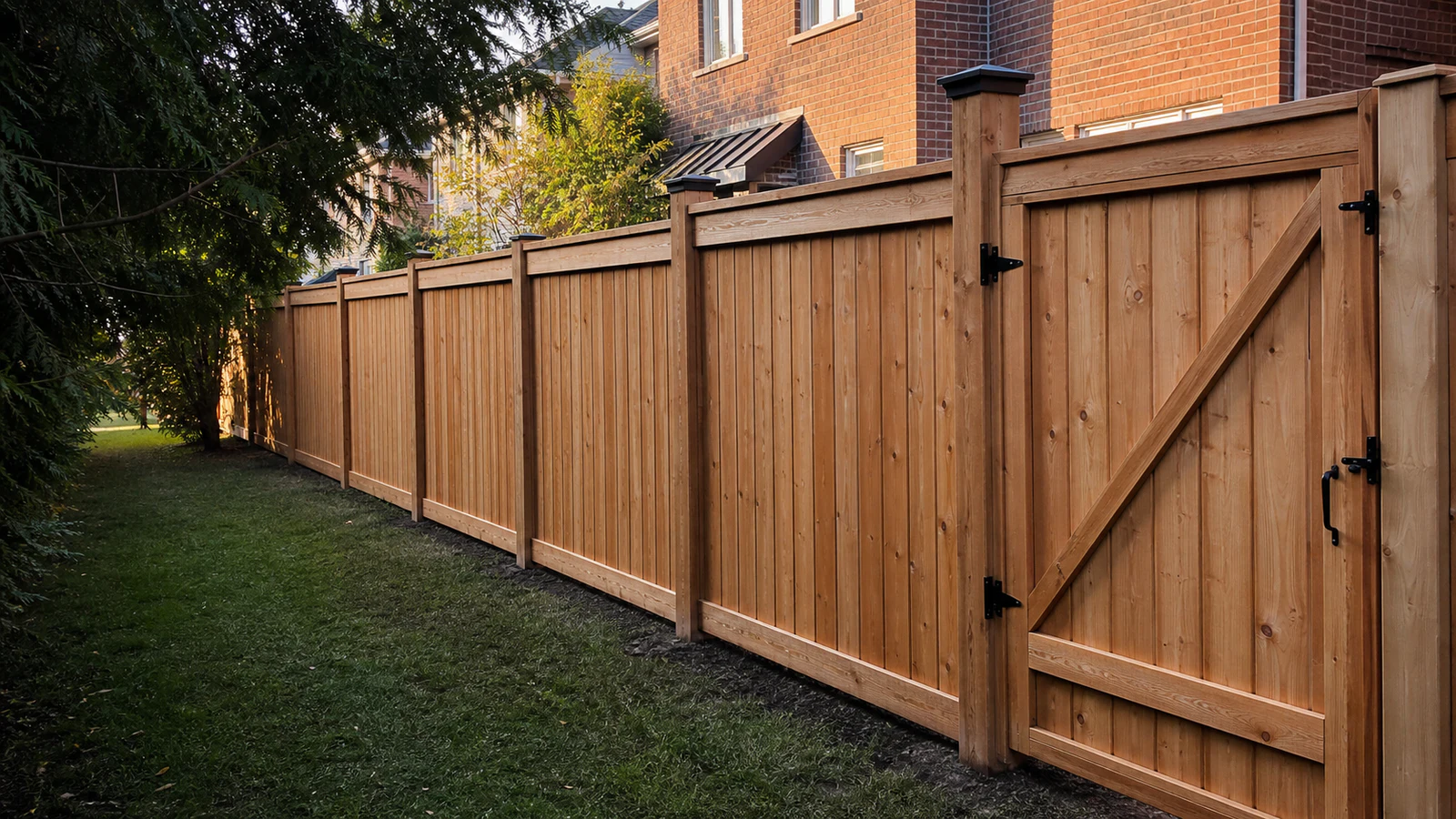
Custom cedar privacy fence and gate along a Greater Toronto Area brick home

CUSTOM FENCE CONTRACTOR TORONTO & GTA

Custom Fences Built for Privacy, Boundaries, and Everyday Use

From straight property-line runs to gates, pool enclosures, and coordinated backyard details, we build fences around the way the property actually works.


Plan My Fence Explore Fence Details
wsib insured
licensed and insured
transparent pricing
built for ontario climate
10 year workmanship
5 star rated

THE LINE THAT SHAPES THE YARD

A Fence Should Solve More Than One Problem

A residential fence marks boundaries, manages views, controls movement, frames the landscape, and becomes the backdrop to everything in the yard. Height alone does not create a good result.

Diamond Decks & Pools plans the route, posts, grades, gates, transitions, materials, and sightlines together. We consider how the fence meets the house, deck, pool enclosure, retaining wall, driveway, trees, gardens, utilities, and neighbouring conditions.

The goal is a fence that feels quiet and intentional: straight where it should be, stepped or followed thoughtfully across grade, easy to use at gates, and compatible with the wider outdoor design.

  • Property-aware layout: survey information, boundaries, grades, utilities, trees, and access reviewed
  • Purposeful design: privacy, security, pool enclosure, airflow, views, pets, and gates considered
  • Complete detailing: posts, rails, boards, caps, hardware, finishes, and transitions specified
Discuss My Fence
custom privacy screen builder toronto gta

WHAT A GOOD FENCE ADDS

Useful Boundaries, Better Outdoor Rooms

The right fence creates structure without making the yard feel boxed in.

FENCE CONSTRUCTION DETAILS

Posts, Gates, Grade, and Water Decide How the Fence Ages

Most fence complaints begin with movement, uneven lines, weak gates, trapped water, or details that did not account for grade. Material quality matters, but the layout and supporting construction matter just as much.

Wood changes as it gains and loses moisture. A thoughtful design allows for natural variation while controlling spans, fasteners, board layout, drainage, and the forces placed on posts and gates.

Layout and Support

  • Boundaries: available survey information and ownership responsibilities clarified before layout
  • Utilities: public and private services considered before excavation
  • Posts: size, spacing, embedment or footing approach, drainage, and exposure matched to the design
  • Grade: fence line stepped, racked, or detailed to follow changing elevations appropriately
  • Loads: wind exposure, long panels, heavy gates, screens, and attached features considered

Boards and Openings

  • Wood: species, grade, orientation, seasoning, finish, and expected movement discussed
  • Fasteners: exterior-rated and selected for material compatibility
  • Gates: frames, clear openings, hinges, latches, stops, and ground clearance coordinated
  • Visibility: driveway sightlines and required open-fence areas preserved
  • Pool barriers: height, openings, gates, access, and permit requirements handled as a separate safety scope

COMPARE WOOD OPTIONS

Cedar or Pressure-Treated? Choose for the Setting and the Care Plan.

Both can build a strong residential fence. Appearance, budget, availability, finish expectations, and how the wood will weather should guide the choice.

Cedar Fence

  • Warm colour and distinctive natural grain
  • Often selected for refined slat, board-on-board, and feature designs
  • Naturally variable boards require thoughtful selection and layout
  • Colour changes outdoors unless a suitable finish is maintained
  • Higher material investment than many pressure-treated options

Best fit: Homeowners prioritizing natural appearance, architectural detail, and a coordinated premium wood palette.

Pressure-Treated Fence

  • Practical availability and strong value for long boundary runs
  • Suitable for traditional privacy panels and many custom profiles
  • Initial colour and moisture content vary, then change with exposure
  • Drying movement, checking, and board variation are normal considerations
  • Finishing should follow product condition and coating guidance

Best fit: Projects balancing broad coverage, dependable function, familiar wood character, and a more restrained material budget.

WHAT SHAPES THE INVESTMENT

A Fence Estimate Should Explain the Whole Run

Linear footage does not capture every condition. Corners, gates, grades, access, demolition, roots, walls, and pool requirements can change both labour and materials.

Request a Detailed Estimate

Length and Layout

Total runs, height, corners, changes in direction, grade, property access, existing fence removal, disposal, neighbours, and working room.

Posts and Panels

Post size and spacing, support method, wood species, board profile, rails, trim, caps, fasteners, stain or coating, and decorative details.

Gates and Openings

Quantity, clear width, single or double leaves, framing, hardware, latches, self-closing needs, access control, and grade clearance.

Connected Work

Pool enclosure, deck screens, retaining walls, pillars, lighting, planting, irrigation, tree protection, utility locating, and restoration.

Our approach: We define what is included along each fence line, so the estimate reflects the actual layout and does not hide important gate, grade, or transition details.

OUR PROCESS

A Straightforward Fence-Building Process

Good planning keeps the installation efficient and prevents last-minute decisions where fences meet gates, structures, and changing grade.

FENCE FAQ

Know the Rules Before the Posts Go in

Fence decisions can involve boundaries, neighbours, utilities, visibility, pools, and municipal rules as well as design.

Ask Us About Your Project

Cost depends on total length and height, demolition, disposal, access, grade, soil, post system, wood or other material, board profile, trim, caps, corners, gates, hardware, finish, pool requirements, utilities, trees, walls, lighting, and restoration.

Toronto fence-height limits depend on property type and where the fence sits, including front, rear, side, driveway, and corner conditions. Grade is measured under the bylaw method, and an exemption process exists for proposals that do not comply. The current bylaw should be checked for the specific location.

A current survey or qualified boundary information can prevent expensive disputes and should be considered when the property line is uncertain. Existing fences, hedges, pins, walls, or neighbour assumptions are not automatically proof of the legal boundary.

Ownership and cost responsibility depend on where the fence is located, agreements, applicable law, and the facts of the property. Homeowners should clarify boundaries and communicate with neighbours before removal or construction. We do not determine legal ownership.

There is no universal lifespan. Wood species and grade, post and drainage details, soil, sun, wind, vegetation, irrigation, finish, fasteners, gate loads, snow, salt, construction quality, and maintenance all affect performance.

A stable hinge post, suitable frame design, diagonal bracing or other anti-sag construction, compatible hardware, controlled leaf size and weight, proper clearances, a positive stop, and thoughtful drainage all help. Heavy gates may need a different post or support strategy.

Potentially, if the complete enclosure complies with municipal requirements for height, openings, climbability, gates, access, construction, zoning approval, permit, and inspection. A typical yard fence should not be assumed to satisfy pool-enclosure rules without review.

Municipal planning references include the City of Toronto Fence Bylaw and pool-enclosure guidance. Current local rules, boundary information, site conditions, utility requirements, and product instructions govern each project.

diamond decks and pools landscaping

PLAN THE FENCE LINE

Tell Us What the Fence Needs to Do

A few photos and measurements help us understand the route, grade, access, gates, and the privacy or enclosure goals behind the project.

01

Share the Layout

Send the property address, approximate lengths, photos of each fence line, available survey, existing fence, grade changes, trees, walls, and access.

02

Describe the Use

Tell us about privacy, pets, children, pool enclosure, gate widths, equipment access, preferred style, material, timing, and budget range.

03

Review a Defined Scope

We clarify assumptions, identify special conditions, and prepare a proposal for the fence, gates, connected work, and restoration.