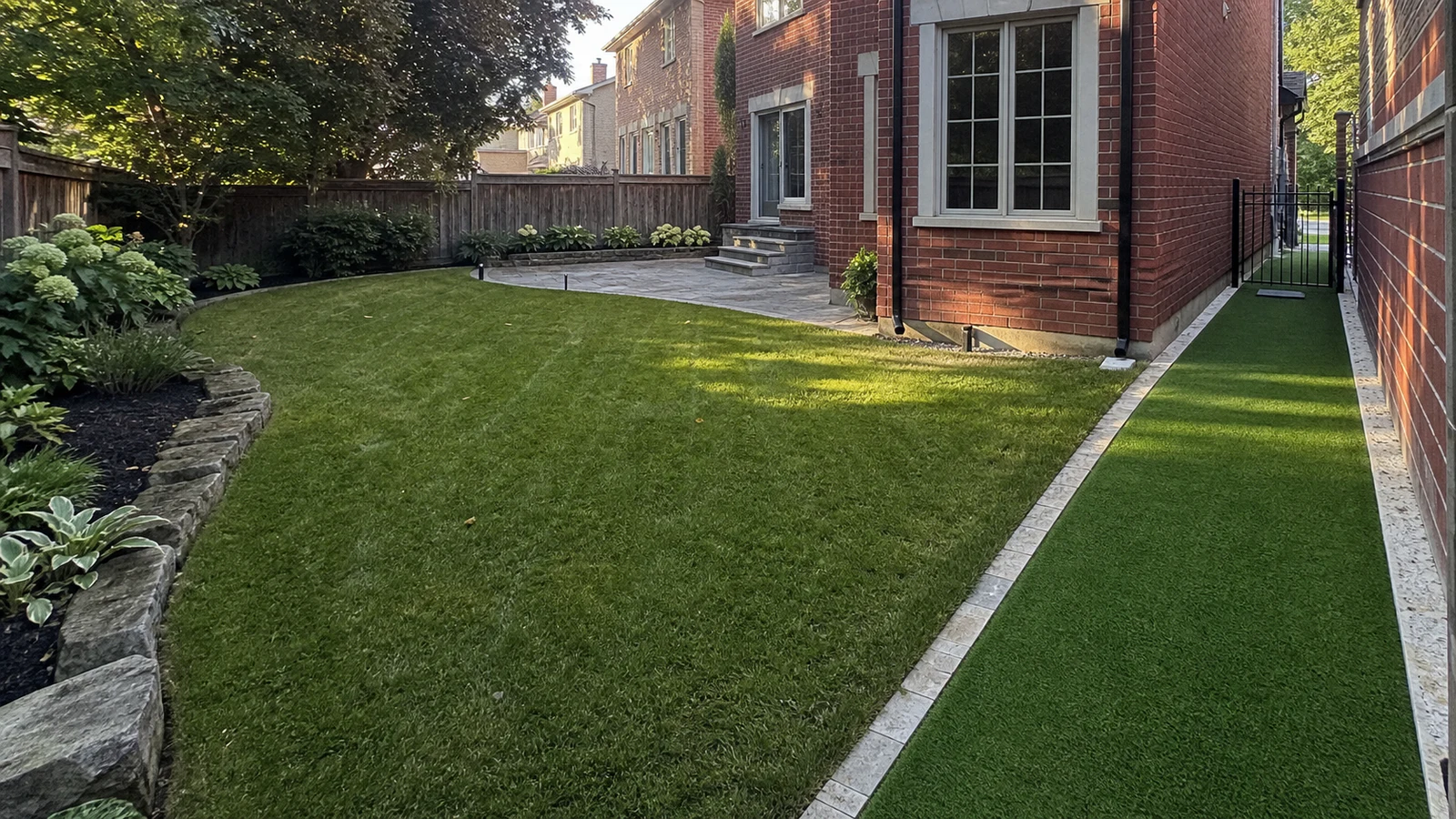
Natural sod lawn beside a separate artificial turf side-yard zone at a Greater Toronto Area brick home

SOD & ARTIFICIAL TURF TORONTO & GTA

Sod and Artificial Turf Installed for the Way the Lawn Gets Used

Natural sod for living landscapes and carefully built artificial turf for selected high-wear zones, with honest guidance on drainage, heat, care, bylaws, and long-term fit.

Plan My Lawn Compare the Options
wsib insured
licensed and insured
transparent pricing
built for ontario climate
10 year workmanship
5 star rated

START WITH THE JOB THE SURFACE MUST DO

A Family Lawn and a High-Wear Side Yard May Need Different Answers

Natural sod creates a living, cooling, permeable surface that can recover and change with care. Artificial turf provides a consistently green manufactured surface that can suit selected areas where shade, pets, mud, or concentrated traffic make natural grass difficult.

Neither option succeeds when it is treated as a roll-out finish. Existing soil, excavation, grade, drainage, base, edges, irrigation, trees, downspouts, use, sun, pet needs, and connected hardscape all influence the installation.

Diamond Decks & Pools can help homeowners use one surface throughout or combine materials deliberately, while preserving required soft landscaping and the broader health of the property.

  • Natural sod: living soil, establishment water, mowing, feeding, repair, shade, and seasonal change considered
  • Artificial turf: excavation, aggregate base, drainage, seams, edges, heat, cleaning, infill, and replacement considered
  • Property fit: zoning, trees, runoff, pets, play, irrigation, patios, paths, gardens, and access coordinated
Discuss My Lawn
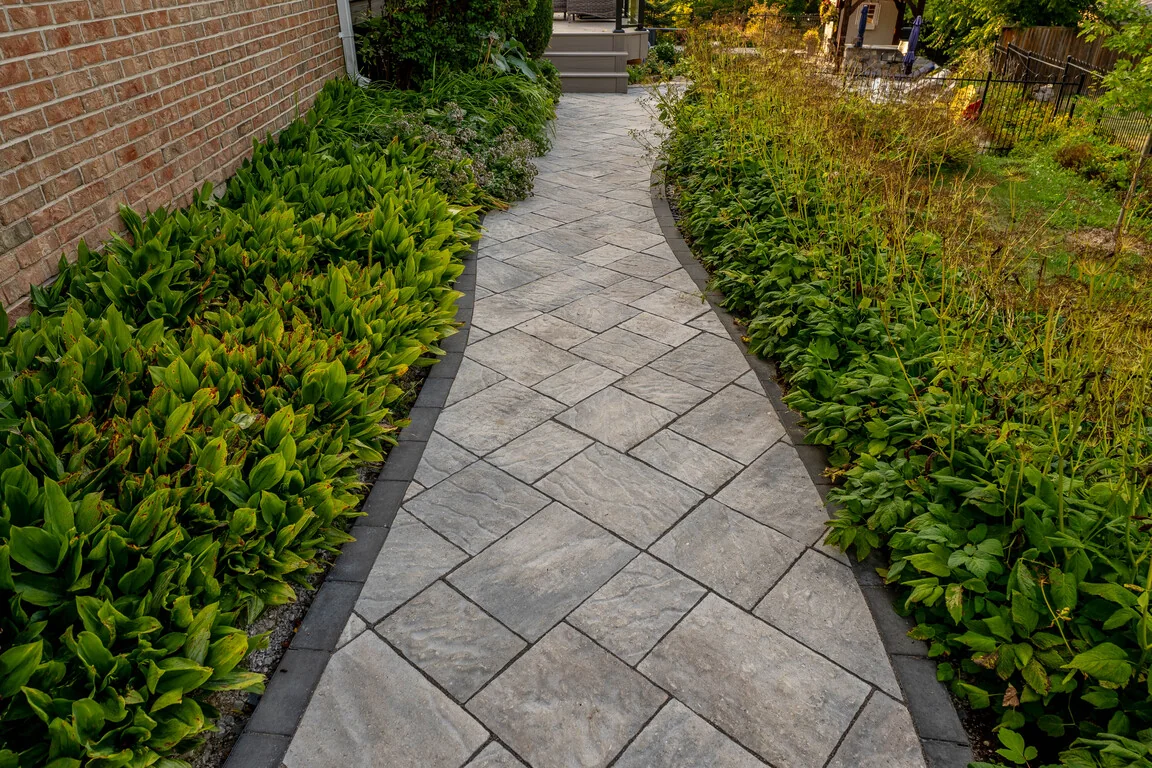
Real Diamond Decks project with an interlocking stone walkway beside planted garden beds

WHAT A PROPER INSTALLATION ADDS

A Better Surface Begins Below the Blades

Preparation, grading, drainage, edges, and aftercare determine whether the finished area remains usable and tidy.

INSTALLATION DETAILS

Natural Grass Needs Soil. Synthetic Turf Needs a Pavement-Like Base.

Sod roots into prepared topsoil and relies on biological activity, water, oxygen, nutrients, and light. Artificial turf is installed over a prepared aggregate base with drainage, seams, edges, and infill or product-specific components.

Putting artificial turf over poor soil without excavation does not create a stable system. Removing all living soil across a yard can also affect zoning compliance, runoff, trees, heat, habitat, and the character of the landscape.

Natural Sod System

  • Grade: positive drainage and finished elevations established before soil
  • Soil: suitable depth, texture, organic matter, compaction, and fine grading prepared
  • Sod: fresh material installed with tight staggered joints and full soil contact
  • Water: establishment irrigation adjusted for weather, soil, shade, and rooting
  • Care: mowing height, traffic, feeding, aeration, weeds, pests, and repair managed

Artificial Turf System

  • Excavation: organic and unsuitable material removed to suit the designed assembly
  • Base: aggregate, compaction, grading, and drainage prepared for use and site conditions
  • Turf: product, pile, backing, drainage, roll direction, seams, cuts, and edges coordinated
  • Infill: type and quantity matched to the product, use, pets, heat, and care plan
  • Service: cleaning, brushing, odour management, snow, repairs, and eventual replacement anticipated

COMPARE THE COMPLETE LIFE CYCLE

Natural Sod or Artificial Turf? Choose by Location, Use, and Tradeoffs.

A single property can use different surfaces for different jobs. Compare establishment, ongoing care, heat, drainage, ecology, appearance, repair, and eventual replacement as well as installation cost.

Natural Sod

  • Living, cooling surface that contributes to soft landscaping
  • Requires suitable light, soil, water, mowing, feeding, and seasonal care
  • Can root, recover, be overseeded, patched, and renovated
  • Mud, wear, pests, drought, shade, and dog use can create challenges
  • Supports soil processes and offers more ecological function than synthetic turf

Best fit: Main family lawns where a living landscape is desired and the site and homeowner can support establishment and regular care.

Artificial Turf

  • Consistent manufactured surface without mowing or routine irrigation
  • Needs excavation, aggregate base, drainage, seams, secure edges, and product-specific installation
  • Can become hot in direct sun and still needs cleaning, brushing, pet care, and repairs
  • Does not count as soft landscaping in Toronto and eventually requires replacement
  • Product quality, pile direction, infill, glare, odour, wear, and disposal deserve review

Best fit: Selected high-wear, shaded, narrow, pet, play, or access zones where the tradeoffs are understood and zoning allows it.

WHAT SHAPES THE INVESTMENT

Compare Installation and Ongoing Care

Sod generally costs less to install but needs living-lawn care. Artificial turf carries a higher construction scope and still requires cleaning, grooming, repair, and eventual replacement.

Request a Detailed Estimate

Removal and Access

Existing lawn or turf, roots, soil, disposal, excavation depth, access width, hauling distance, protection, utilities, and work around trees.

Subsurface Work

Grading, drainage, topsoil and amendments for sod, or aggregate, compaction, separation, and edge systems for artificial turf.

Surface

Sod type and freshness, or artificial turf product, backing, pile, roll layout, seams, cuts, edges, infill, waste factor, and warranty.

Connected Work

Irrigation, drains, patios, paths, garden beds, fences, play equipment, pet zones, lighting, tree protection, permits, and restoration.

Our approach: We define the assembly below the surface and the care expectations above it, so the comparison is based on the real property rather than the colour of a sample.

OUR PROCESS

A Different Build for Each Surface

Both begin with use, grade, and drainage, then follow a material-specific preparation and finishing sequence.

SOD & ARTIFICIAL TURF FAQ

Honest Answers About Water, Heat, Pets, and Care

The best surface is the one whose performance and maintenance fit the exact zone.

Ask Us About Your Project
Cost depends on area, removal, disposal, access, grade, drainage, roots, utilities, soil and sod, or excavation, aggregate base, compaction, turf product, seams, cuts, edges, infill, pet treatment, irrigation changes, hardscape connections, and restoration.
No. The City of Toronto states that artificial turf is not soft landscaping and does not count toward required soft-landscaping percentages. Property zoning, lot width, yard location, existing coverage, and proposed work should be reviewed before replacing living landscape.
Light access and normal use depend on rooting, soil moisture, weather, irrigation, sod condition, and season. Traffic should be limited during establishment, and the first mow should wait until the lawn has rooted enough that the mower will not lift or rut it.
There is no fixed schedule for every site. New sod needs consistent moisture through the sod and into prepared soil without prolonged saturation or runoff. Frequency changes with heat, wind, rain, shade, soil, grade, irrigation coverage, and rooting.
Yes. Synthetic surfaces can become significantly warmer in direct sun. Product, pile, infill, colour, wind, shade, surrounding hardscape, and time of day influence temperature. Shade and temporary cooling can help, but heat should be considered for children and pets.
It can suit selected pet areas when drainage, base, turf, seams, edges, infill, cleaning access, waste removal, odour control, rinse water, heat, digging, and replacement expectations are planned. It is not maintenance-free.
Sometimes, if the surface, drainage, slope, cracks, joints, edges, door clearances, softness, heat, and attachment method suit the intended system. Covering a drainage or structural problem does not correct it.
Grass tolerance has limits. Tree canopy, building shade, root competition, soil, moisture, airflow, traffic, and species all matter. Pruning, soil improvement, suitable seed or sod, reduced traffic, groundcover, planting, or a different surface may be more realistic.

Municipal planning references include City of Toronto zoning guidance for soft landscaping and artificial turf. Current zoning, site drainage, tree requirements, product instructions, soil conditions, and establishment or maintenance care govern each project.

diamond decks and pools landscaping

CHOOSE THE RIGHT LAWN SURFACE

Show Us How the Area is Used and Where it Struggles

Photos after rain, during the sunniest part of the day, and at normal use times help reveal what the new surface must handle.

01

Share the Area

Send the address, dimensions, photos, sun and shade, drainage observations, trees, irrigation, pets, play, existing surface, access, and hardscape.

02

Set the Priorities

Tell us about appearance, barefoot use, cooling, mud, mowing, water, pets, maintenance, timing, budget, and whether a mixed solution is possible.

03

Compare a Defined Scope

We assess zoning and site fit, then define the natural-sod or artificial-turf assembly, connected work, care, and clear estimate.