
 Decks
Decks Pools
Pools Stonework
 Outdoor Structures
 Outdoor Living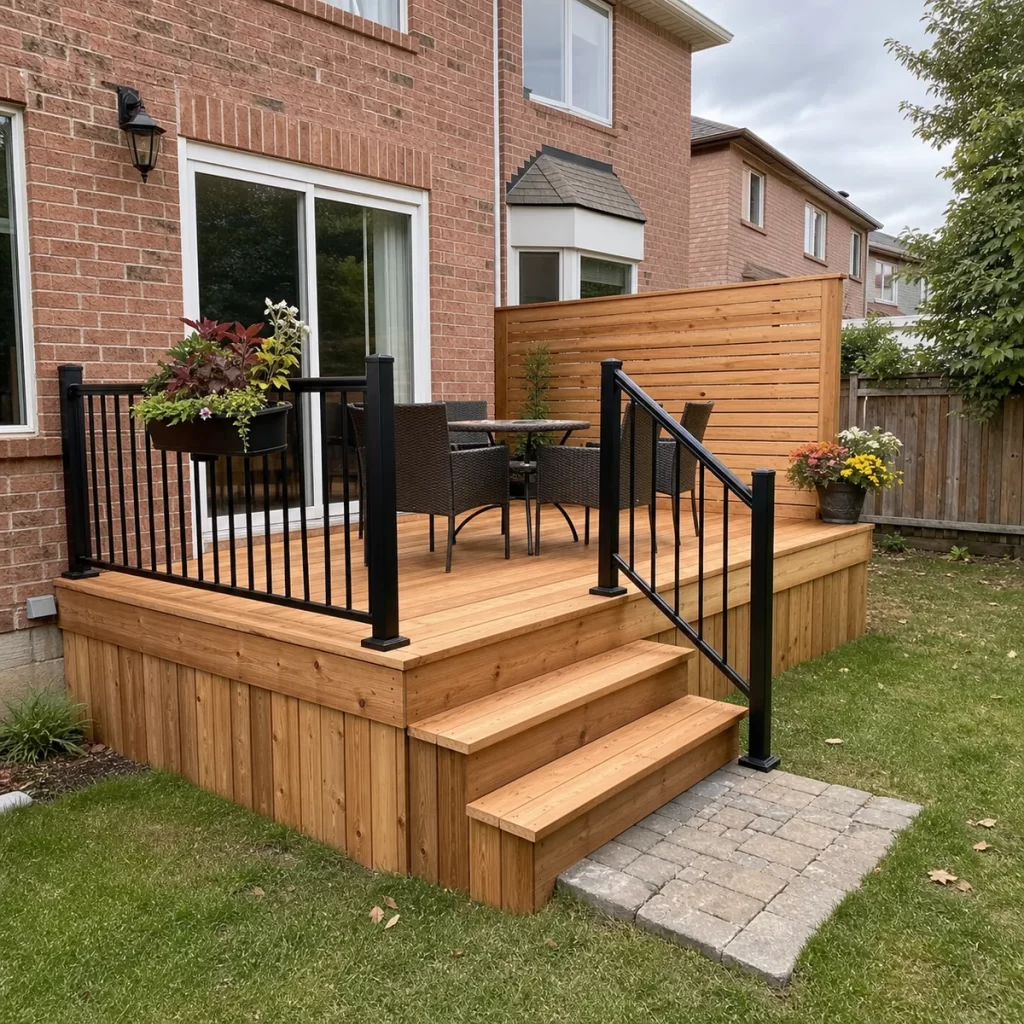
Updated August 2026
Cedar offers warm colour, natural grain, and a comfortable wood surface, but it should be chosen with a clear understanding of grade, weathering, finishing, checking, fasteners, and recurring care in Ontario conditions.
Why Homeowners Choose Cedar
Cedar has a depth and variation that manufactured grain patterns cannot duplicate exactly. Its colour can complement brick, stone, mature planting, and traditional or contemporary architecture. It is also comparatively light and pleasant to work with when properly selected and installed.
For homeowners who value natural material and accept how wood changes outdoors, cedar can create a refined deck that feels connected to the landscape. Explore how we plan custom cedar decks around grade, finish, railings, and the home.
Cedar Grade and Selection Matter
The word cedar does not describe one uniform product. Species, grade, grain, moisture, board dimensions, and allowable characteristics influence appearance and performance. Clearer grades generally contain fewer knots and cost more; knotty grades provide a more rustic appearance.
Review representative boards and define what visual variation is acceptable. A sample with one ideal board does not show how a full deck will vary. Material availability can also influence lead time and selection.
Weathering and Colour Change
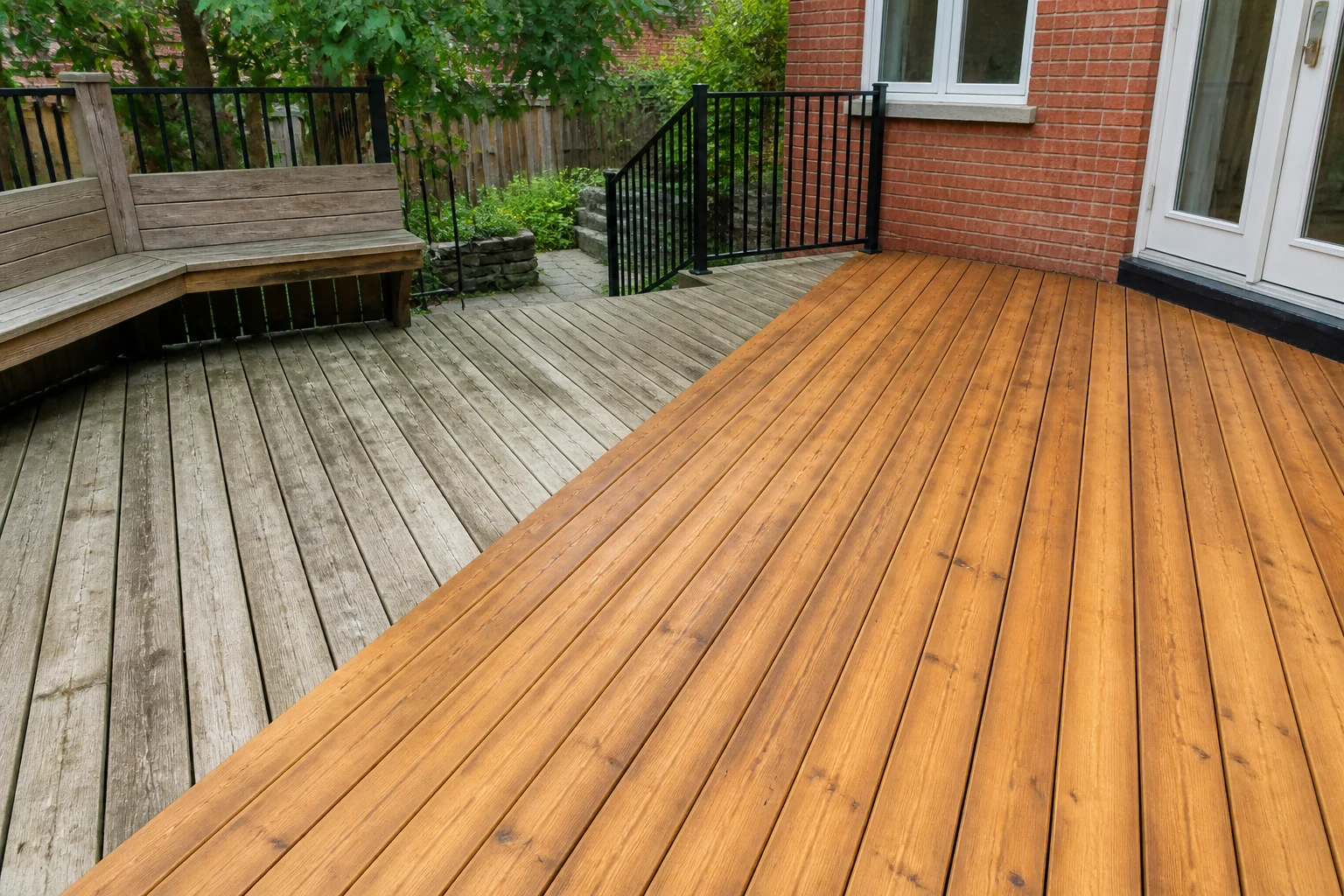
Cedar changes outdoors. Without a suitable finish, the surface will weather toward grey, with the rate and uniformity influenced by sun, moisture, exposure, furniture, and nearby vegetation. Covered and exposed portions of the same deck may age differently.
A finish can preserve or guide colour, but it is not permanent. Preparation, product, application conditions, and maintenance determine the result. Homeowners should choose between maintaining a selected tone and accepting a natural weathered appearance before the project begins.
Maintenance and Surface Wear
Cedar needs cleaning and periodic inspection. Depending on the desired appearance, it may also need refinishing. Soft wood can dent or scratch under furniture and active use, and natural checking or splinters may develop over time.
Use furniture feet that distribute loads and avoid trapping moisture. Address food, grease, leaf stains, and standing debris promptly. Follow the coating manufacturer’s preparation and weather requirements rather than adding layers over a failing finish.
Installation Details Affect the Result
Suitable fasteners help avoid staining and corrosion. Board spacing, end treatment, ventilation, water management, joist protection, and attachment details need to fit the selected material and approved design. Cedar fascia, railings, screens, and stairs may weather differently based on orientation.
A high-quality surface still depends on a sound frame and foundation. The deck should be detailed as a complete system, not treated as cedar boards applied to a generic structure.
Cedar Compared With Other Decking
Pressure-treated wood generally offers a lower initial material cost and a more utilitarian starting appearance. IPE is denser, heavier, and has different installation and sourcing considerations. Composite and PVC avoid recurring wood stain but bring different cost, heat, texture, and product requirements.
The best comparison uses actual samples, a complete installed scope, and an honest maintenance discussion. Visit the deck material guide to compare cedar with the other systems Diamond Decks & Pools installs.
| Cedar advantage | Cedar consideration |
|---|---|
| Authentic colour and grain | Natural variation and weathering |
| Warm, traditional material | Periodic cleaning and possible refinishing |
| Works with many home styles | Grade and board selection affect the result |
| Can be refinished | Soft surface can dent, check, or splinter |
Choose the Appearance You Are Willing to Maintain
Cedar can be kept closer to its warm original colour with a suitable finish and recurring care, or allowed to weather toward grey. Neither path is automatically right. The important choice is whether the homeowner accepts natural variation and uneven exposure or wants a more managed appearance that requires cleaning, preparation and reapplication over time.
Covered and uncovered areas will not age identically. Furniture, planters and rugs can also create colour differences. Discuss these realities before choosing cedar for a partially covered deck, a screened area or a design with many fixed objects. A finish can influence weathering, but it does not turn natural wood into a uniform manufactured surface.
| Appearance goal | What to expect | Planning implication |
|---|---|---|
| Warm cedar tone | Periodic cleaning, preparation and refinishing | Choose a finish system and commit to its care cycle |
| Natural grey | Gradual colour change that varies by exposure | Accept differences between covered and open areas |
| More uniform grain | Higher-select grades and careful board placement | Review grade, quantities and visible faces before ordering |
| Rustic character | More knots and natural variation | Confirm the allowed grade and expectations in the scope |
When Cedar Is the Right Choice
Cedar is compelling when natural material is central to the design, the owner values grain and warmth, and recurring care is acceptable. It can be especially successful beside brick, natural stone and mature planting, where some variation strengthens the relationship to the landscape.
It may be a poor fit when the priority is highly consistent colour with minimal refinishing, or when the deck will receive hard wear without a realistic care plan. Compare cedar with composite decking, PVC decking and IPE decking using full-size outdoor samples and the complete installed system.
- Specify species, grade, dimensions and visible quality expectations.
- Use suitable fasteners and installation details for cedar.
- Plan ventilation and drainage around every wood surface.
- Follow finish conditions and preparation instructions carefully.
- Budget for the ownership routine, not only the initial boards.
Common questions
Does cedar decking need to be stained?
Not necessarily, but unfinished cedar will weather and change colour. Use a suitable finish when preserving a chosen colour is important, and expect recurring care.
Does cedar turn grey?
Cedar exposed outdoors naturally weathers toward grey if its colour is not maintained. Exposure and moisture can make the change uneven.
Is cedar lower maintenance than composite?
Generally no. Composite avoids wood refinishing, while cedar may need cleaning, preparation, and finish renewal depending on the desired appearance.
Why does cedar weather unevenly?
Sun, moisture, shelter, airflow, furniture and nearby vegetation vary across a deck. Covered boards often change differently from exposed boards, and objects left in place can create visible outlines.
What should be specified in a cedar deck quote?
The proposal should identify the cedar species and grade, board dimensions, visible quality expectations, fasteners, finish responsibility, trim and railing scope, and the care assumptions discussed with the homeowner.
Choose Cedar With the Full Ownership Picture
We will help you compare grade, appearance, finish, detailing, maintenance, and installed scope before selecting a natural wood deck.
