
 Decks
Decks Pools
Pools Stonework
 Outdoor Structures
 Outdoor Living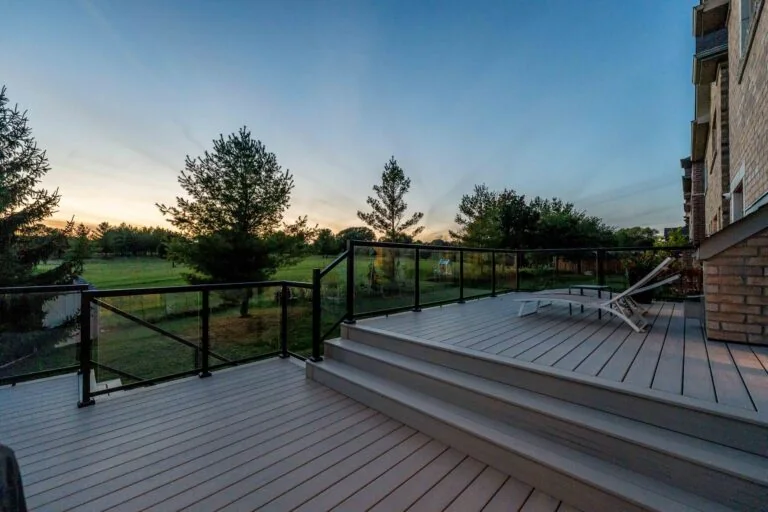
Updated August 2026
Composite and pressure-treated wood can both produce a well-built deck. The better choice depends on how you balance upfront budget, ongoing maintenance, appearance, surface feel, design flexibility, and how long you expect to use the space.
The Main Difference Is the Ownership Experience
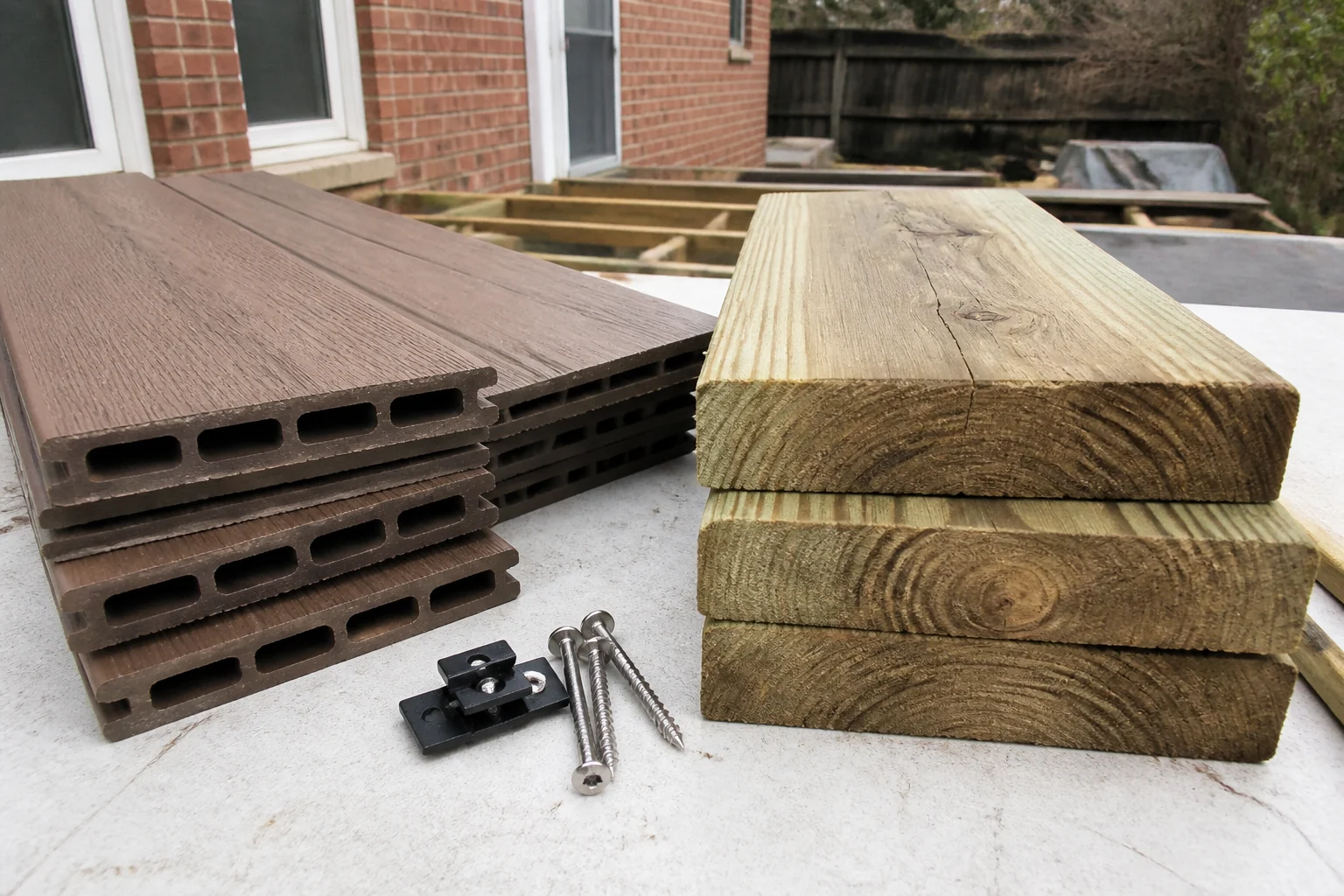
Pressure-treated decking is real wood treated to resist decay and insects. It offers a familiar appearance and can be stained in many tones, but weathering, checking, fading, and recurring finishing are part of owning it. Maintenance frequency depends on exposure, product selection, preparation, and the finish used.
Composite decking is manufactured from a blend of materials and typically uses a protective cap on the exposed surface. It avoids sanding and staining, but it still needs cleaning and sensible care. Scratches, food spills, standing debris, and heat should be considered rather than describing any outdoor product as maintenance-free.
Compare Cost Beyond the Deck Boards
Pressure-treated boards generally have a lower initial material price. Composite boards generally cost more and may require brand-specific fasteners, breaker boards, ventilation, or framing layouts. The finished price also includes foundations, framing, stairs, fascia, guards, permits, demolition, access, and labour.
Long-term cost is personal. Some homeowners are comfortable cleaning and refinishing wood; others place greater value on avoiding that recurring work. Ask for a clearly defined estimate for the complete deck and compare the maintenance you realistically intend to perform.
| Decision factor | Composite decking | Pressure-treated decking |
|---|---|---|
| Initial material cost | Usually higher | Usually lower |
| Routine care | Cleaning and product-specific care | Cleaning plus periodic finishing |
| Appearance | Consistent colours and embossed grain | Natural grain with colour variation |
| Splinters and checking | Does not splinter like natural wood | Natural checking and splinters can occur |
| Refinishing | Not stained or sanded like wood | Can be refinished when properly prepared |
Think About Appearance in Real Conditions
Evaluate full-size samples outdoors against the brick, siding, doors, and existing stone. Small samples can look different across a large deck, especially in direct sun. Ask how the colour will be used on field boards, borders, fascia, and stairs rather than selecting a board in isolation.
Pressure-treated wood changes as it dries and weathers. Stain can guide the final colour, but wood grain and absorption vary. Composite provides more consistency, although batches and product lines should still be coordinated. A picture-frame border can improve edge finishing and help organize a complex layout.
Account for Sun, Shade, and Surface Temperature
Any decking can become warm in direct sun. Darker colours generally absorb more heat, and sheltered spaces can behave differently from open, breezy decks. If bare feet, children, or pets are a concern, place samples in the intended exposure and compare them on a representative day.
Shade structures, furniture placement, lighter colours, and airflow can improve comfort. Around a pool, also review slip characteristics, drainage, and the selected manufacturer’s guidance. Material selection is one part of a comfortable design, not the whole answer.
Installation Quality Still Controls the Result
Premium boards cannot compensate for poor foundations, undersized framing, weak stair details, or careless water management. Joist spacing, ventilation, fastener placement, gapping, and end treatment must follow the selected product and the approved design.
Diamond Decks & Pools is a TrexPro Platinum contractor, but we still compare systems around the property and owner priorities. Explore the broader composite deck planning process and compare it with pressure-treated deck construction before deciding.
A Practical Way to Choose
Start with four questions: What is the realistic budget for the complete structure? How much recurring maintenance will you actually perform? What appearance suits the home? How will the deck be exposed and used? Those answers usually narrow the decision faster than a generic list of pros and cons.
Then compare actual products and a written scope. Warranties, cleaning instructions, approved fasteners, colour options, and installation requirements vary by manufacturer and line. The right recommendation should name the exact system, not simply say composite or wood.
Compare the Ownership Experience Side by Side
The most useful comparison is not ‘premium versus basic.’ It is the day-to-day ownership experience each material creates. Pressure-treated wood rewards homeowners who enjoy natural variation and are prepared to clean, inspect and refinish it. Composite is suited to homeowners who want to avoid recurring wood stain, while accepting a higher initial product cost and following the selected manufacturer’s cleaning and installation guidance.
Both can be excellent when the structure, ventilation, water management and details are right. Both can disappoint when the material is chosen from a small sample without considering sun exposure, border layout, fascia, railings and the way the colour meets the house.
| Decision factor | Composite decking | Pressure-treated wood |
|---|---|---|
| Appearance | Consistent colour families and embossed grain | Natural grain, knots and changing character |
| Routine care | Cleaning and periodic inspection | Cleaning, inspection and refinishing as needed |
| Upfront material cost | Typically higher | Typically lower |
| Colour over time | Fading and weathering vary by product | Wood weathers unless a finish is maintained |
| Installation | Product-specific gapping, fastening and framing rules | Wood-specific spacing, fasteners and end details |
Run a Real-World Sample Test
Place sample boards where the deck will be built for several clear days. Look at them in morning shade, afternoon sun and beside the home’s brick, doors and stone. Touch them after sun exposure, view them from inside the house and place likely railing colours against them. A sample that looks neutral indoors may read much warmer, cooler or darker across a full deck.
Ask to see the field board, border board and fascia together. Confirm the exact product line, profile, warranty documents and approved fasteners in the proposal. For pressure-treated wood, discuss the expected grade, initial drying period and finish plan. This turns a broad material category into a decision about the actual system that will be installed.
- Compare complete installed scopes rather than board prices.
- Review sample temperature in the intended exposure.
- Confirm joist spacing and fastening for the selected board.
- Include fascia, stairs and railings in the colour decision.
- Choose the maintenance routine you are realistically willing to keep.
Common questions
Does composite decking require maintenance?
Yes. It usually needs less recurring work than finished wood, but it still needs cleaning, debris removal, and care that follows the manufacturer’s instructions.
Is composite decking always better than pressure-treated wood?
No. Composite is a strong fit for lower-maintenance priorities, while pressure-treated wood can be the right choice for a lower initial budget and a natural wood surface.
Which decking stays cooler?
Surface temperature varies by colour, material, sun exposure, airflow, and product line. Test representative samples in the intended location instead of relying on a category-wide claim.
Does composite decking look like real wood?
Modern composite products can provide convincing colour variation and grain, but they remain manufactured boards. View several full-length boards outdoors because repeating patterns and colour movement are easier to assess at scale.
Can composite boards be installed on an existing wood frame?
Sometimes, but the existing foundations, framing condition, joist spacing, ventilation and geometry must first be assessed against the selected product’s requirements. Reusing a frame should be a structural decision, not an assumption.
Compare the Complete Deck, Not Just the Board
We help homeowners compare materials, structure, maintenance, design details, and installed scope around one clear project plan.
