
 Decks
Decks Pools
Pools Stonework
 Outdoor Structures
 Outdoor Living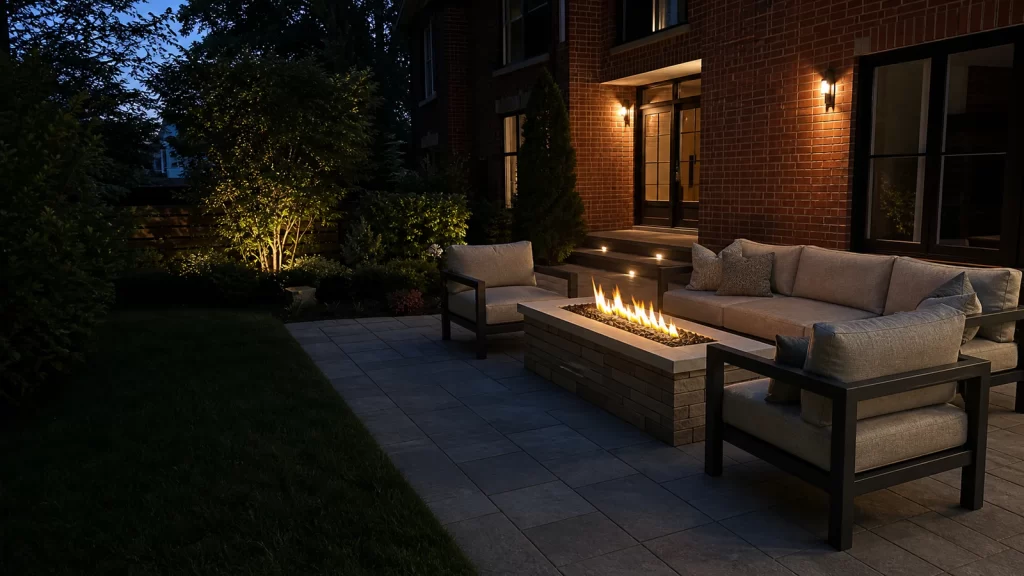
Updated August 2026
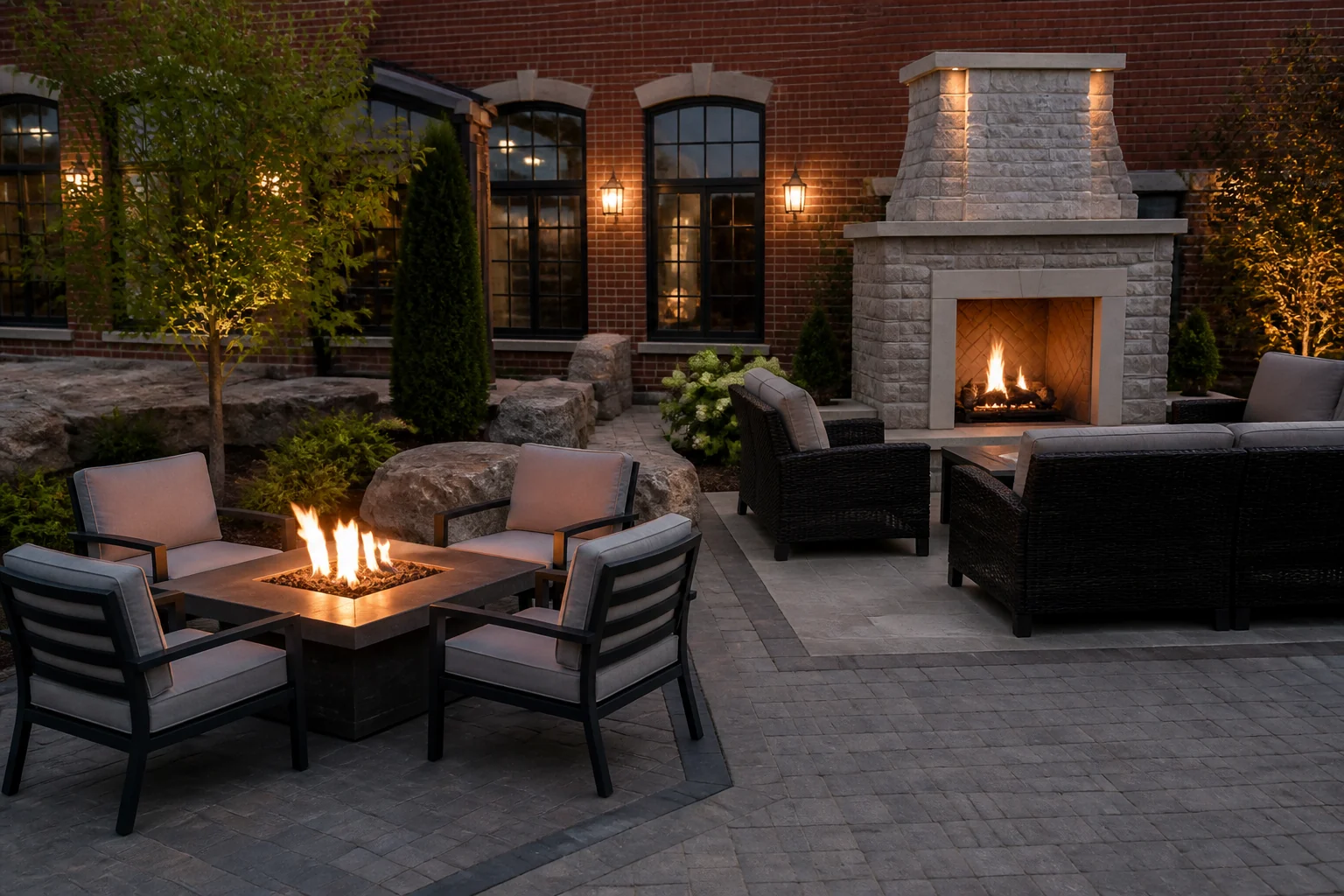
A fire pit creates a gathering circle; an outdoor fireplace creates a focal direction. That difference influences seating, footprint, wind protection, construction, views, fuel, and how the feature fits the rest of the backyard.
How the Two Experiences Differ
A fire pit typically places people around the flame, which encourages face-to-face conversation. It can be built in or supplied as an approved manufactured unit. Because the feature is central, the plan needs comfortable circulation and enough distance between seating and heat.
A fireplace faces one direction. Seating gathers in front of it, much like an indoor room, and the structure can screen a view or define an edge. Its height and mass make it a major architectural element even when it is not operating.
Compare Footprint and Seating
The feature itself is only part of the footprint. A fire pit needs a complete seating ring and a route around it. A fireplace needs a hearth or safe front zone plus enough depth for lounge furniture. Draw both options to scale before assuming one is smaller.
Consider where people will place drinks, how chairs move, and whether the route to the house or pool crosses the heat zone. The feature should not make the main patio difficult to use on nights when no fire is desired.
Choose Fuel and Equipment Before Masonry
Wood, natural gas, and propane create different operating experiences and regulatory requirements. Wood produces smoke, sparks, ash, and fuel storage needs. Gas offers faster control but requires approved equipment and appropriately qualified installation. Propane storage and routing also need careful planning.
Select the listed appliance or burner system before finalizing the enclosure. Required openings, ventilation, drainage, clearances, media, controls, and service access come from the exact product documentation. Decorative masonry should support those requirements, not hide or contradict them.
Study Wind, Smoke, and Nearby Surfaces
Prevailing wind affects comfort and where smoke or heat travels. Review neighbouring windows, fences, trees, overhangs, pergolas, furniture, and combustible surfaces. A feature that appears well placed on a quiet plan may be uncomfortable in the yard’s usual evening wind.
Do not place an appliance based on a generic internet clearance. Use the manufacturer requirements, applicable codes, local rules, and qualified trades. Conditions differ between open flame, listed gas appliances, wood-burning fireplaces, and portable units.
Match the Feature to the Whole Design
Stone, metal, brick, and concrete should connect with the patio, house, and other outdoor elements. A fireplace can repeat masonry from the home; a low fire pit can preserve a garden or pool view. Lighting should help people move around the feature without competing with the flame.
An integrated outdoor fire feature is most successful when planned with the patio, retaining walls, seating, utilities, drainage, and planting. This prevents a freestanding feature from feeling stranded in the middle of the yard.
Compare Cost and Maintenance Honestly
A manufactured gas fire table may be simpler than a custom masonry fireplace, but product, gas, electrical, foundation, stonework, and access still affect cost. A full fireplace adds structure, masonry, appliance or firebox requirements, and potentially more approvals.
Maintenance depends on fuel and materials. Wood-burning features need ash and chimney or flue care where applicable. Gas appliances need covers, drainage, clean media, accessible controls, and service according to their instructions. Stone and metal also weather and require suitable care.
| Decision | Fire pit | Outdoor fireplace |
|---|---|---|
| Conversation | People face one another | People face the feature |
| Visual impact | Lower, more open profile | Strong vertical focal point |
| Footprint | Central seating ring | Front-facing outdoor room |
| Wind protection | Usually more exposed | Structure may shelter one side |
| Design role | Flexible gathering feature | Architectural anchor |
Compare the Two Layouts Before Choosing the Feature
Draw the seating and circulation around each option at full scale. A fire pit may look compact until four or six chairs, safe operating clearances and a route around them are added. A fireplace occupies more visual and structural space, but it can organize furniture efficiently in one direction and screen a less desirable view.
In Toronto, wood-fuelled recreational fire pits and outdoor fireplaces are generally not permitted, while qualifying natural gas or propane campfire-effect units may be used when approved, located and operated as required. Rules vary by municipality and can change, so confirm the current local requirements and the selected appliance documentation before designing the patio around it.
| Decision | Fire pit | Outdoor fireplace |
|---|---|---|
| Conversation | Seats face one another around the flame | Seats face a single focal point |
| Visual profile | Lower and more open | Taller and more architectural |
| Footprint | Needs a complete seating ring | Needs depth, hearth zone and front-facing seating |
| View | Usually preserves longer views | Can frame or intentionally block a view |
| Construction | Manufactured or custom depending on system | Often requires more foundation, masonry and coordination |
Resolve Safety and Service Before the Stonework
Select the exact appliance before finalizing masonry dimensions, ventilation or gas routing. Manufacturer instructions control installation and clearances; a generic opening built first may not suit the certified unit later. Coordinate shutoffs, ignition, drainage and service access so maintenance does not require dismantling the finished surround.
Test the location against prevailing wind, eaves, fences, trees, furniture and common walking routes. Lighting should reveal the path and patio edge without competing with the flame. Plan a non-fire seating mode as well, because the outdoor room should remain comfortable when the feature is off.
- Verify municipal rules before selecting fuel or location.
- Use certified outdoor equipment and follow current manufacturer instructions.
- Keep required clearances from combustible materials and structures.
- Provide qualified gas and electrical work where required.
- Leave valves, controls and replaceable components accessible.
Common questions
Is a gas fire pit allowed under a pergola?
It depends on the exact listed appliance, required overhead and side clearances, ventilation, local rules, and the structure. Obtain product-specific and qualified advice before planning the location.
Does an outdoor fireplace need a permit?
Requirements vary by municipality, fuel, construction, and whether the feature includes a chimney, gas work, or other regulated components. Confirm before construction.
Which option is better for a small backyard?
A compact approved fire feature can work, but the required clearances and complete seating footprint decide whether it truly fits. Do not size the decision from the appliance alone.
Are wood-burning fire pits allowed in Toronto backyards?
Toronto states that wood-fuelled recreational fire pits and outdoor fireplaces are not permitted without the applicable authorization. Confirm the current City guidance before purchasing or installing any unit.
Can a fire feature be added after a patio is built?
Sometimes, but routing gas or electrical service, providing foundations and meeting clearances may require opening finished work. Planning the exact feature with the patio usually produces a cleaner and more serviceable result.
Design the Gathering Space Before Choosing the Flame
We coordinate seating, stonework, utilities, lighting, and the selected fire system around one safe and comfortable outdoor plan.
