
 Decks
 Pools
 Stonework
 Outdoor Structures
 Outdoor Living
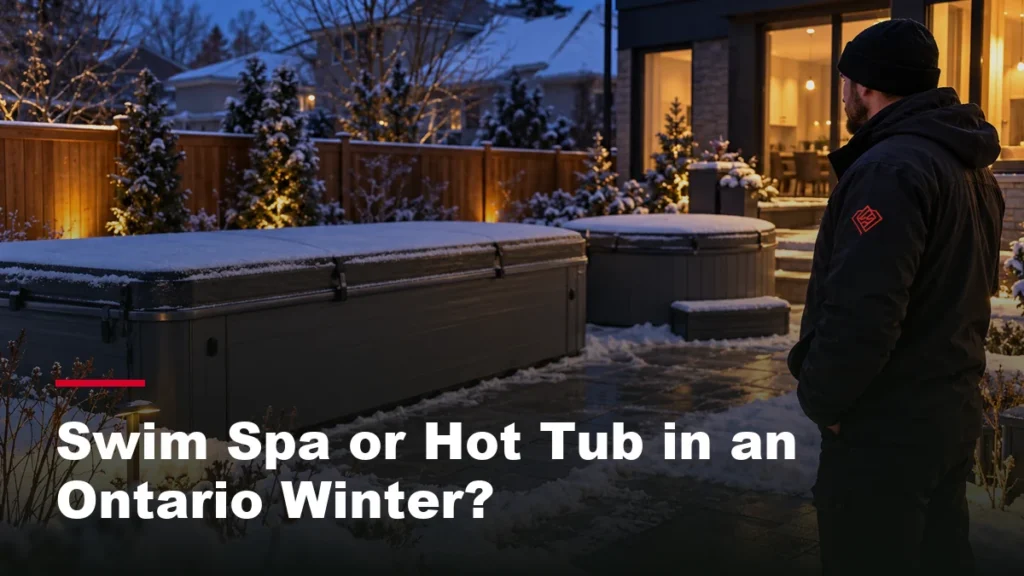
Choosing between a swim spa or hot tub for an Ontario winter comes down to how you plan to use it when the yard is under snow, not to which one sounds more impressive in July. If you're still at the sketch stage, our plunge pool and spa planning is a good place to see how compact water fits a backyard.
Both can be used through a cold season. What differs is the size of the thing you're heating and covering, the walk to it in January, and the space and power it needs. Those are decisions made before anything is delivered, which is why they belong in a plan.
Quick take
A hot tub suits short, warm soaks and a small footprint. A swim spa suits people who want to exercise in the water all winter and have the room. Neither is simply better in the cold. The better fit is the one you'll actually walk out to on a dark February evening.
Swim spa vs hot tub in an Ontario winter: what changes
In summer, a hot tub and a swim spa mostly differ by size. In winter the gap widens. The water is warm and the air isn't, so every minute the lid is off, heat leaves. Wind, snow on the cover and a frozen path to the back door all start to matter.
A hot tub is a short visit. You walk out, soak, and put the cover back on. A swim spa is often a longer one, because people buy them to swim in place or exercise against a current. A longer session in cold air asks more of the cover, the path and the steps, and a bit more of you when you get out.
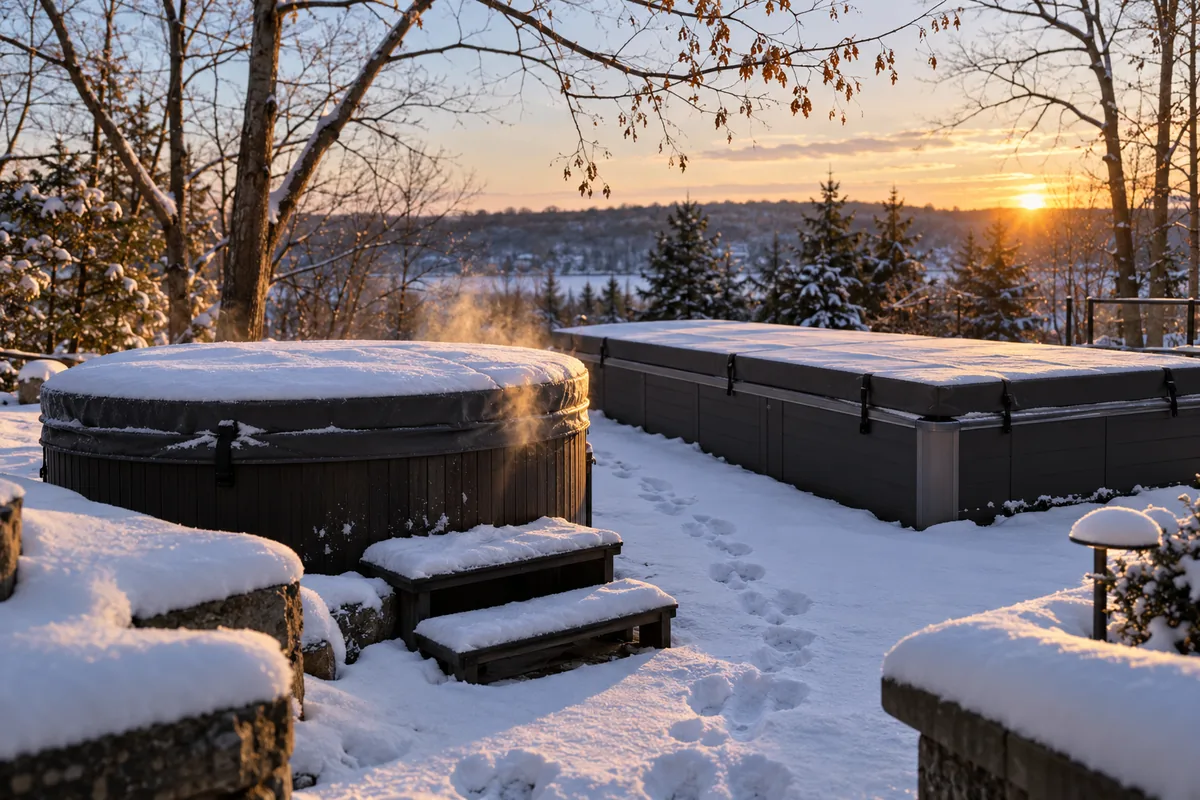
Side by side: how they compare in the cold
This is general, not a spec for any one model. Makers differ, so treat it as a list of things to check.
| What to compare | Hot tub | Swim spa |
|---|---|---|
| Typical winter use | Short, warm soaks, often in the evening. | Swimming in place or exercise, sometimes longer sessions. |
| Size and footprint | Compact, easier to place close to the house. | Usually much larger, so it needs a bigger and more open area. |
| Cover | A tight-fitting insulated lid. | Often a larger or rolling cover, so ask how it is handled in snow. |
| Heat loss risk | Mostly when the lid is off. | Same idea, with more water and more surface to look after. |
| The walk out | Short path, a few steps. | Longer route is common, so snow clearing and lighting matter more. |
| Power and base | Plan the electrical supply and a level, supported spot. | Plan the same, with a larger base and a bigger supply discussion. |
None of those rows has a winner on its own. They point to what you should ask a spa maker, an electrician and your builder before you commit.
Heat, covers and what the makers say
Insulation and the cover do most of the work in a swim spa vs hot tub comparison for an Ontario winter, and makers are open about it. Master Spas, which sells both, says its swim spas are fully insulated and recommends an end-to-end rolling cover for cold climates to prevent heat loss and protect against snow and ice. It also advises keeping a minimum temperature when you aren't using the spa, to avoid strain on the system (checked October 2026).
Hot Spring, another maker, describes a good hot tub cover as a tight-fitting lid with dense insulation. Its winter hot tub tips also point out that cold, dry air makes spa water evaporate faster, that circulation is what helps prevent frozen pipes, and that any draining should happen before temperatures fall below freezing (checked October 2026).
Did you know
Makers write their winter advice for their own products. Ask the supplier for the owner's guidance on cold weather, power outages and cover care for the exact model, and keep it with your paperwork.
Master Spas also publishes a page of winter hot tub and swim spa questions covering temperature settings, winter operating costs and what to do in a power outage. Operating costs depend on the model, the local electricity rate and how you use it, so get the numbers from your supplier rather than from a general article.
Download the free quick guide
A one-page list of what to ask your supplier, electrician and builder before you choose a hot tub or swim spa.
The yard around it matters more than the tub
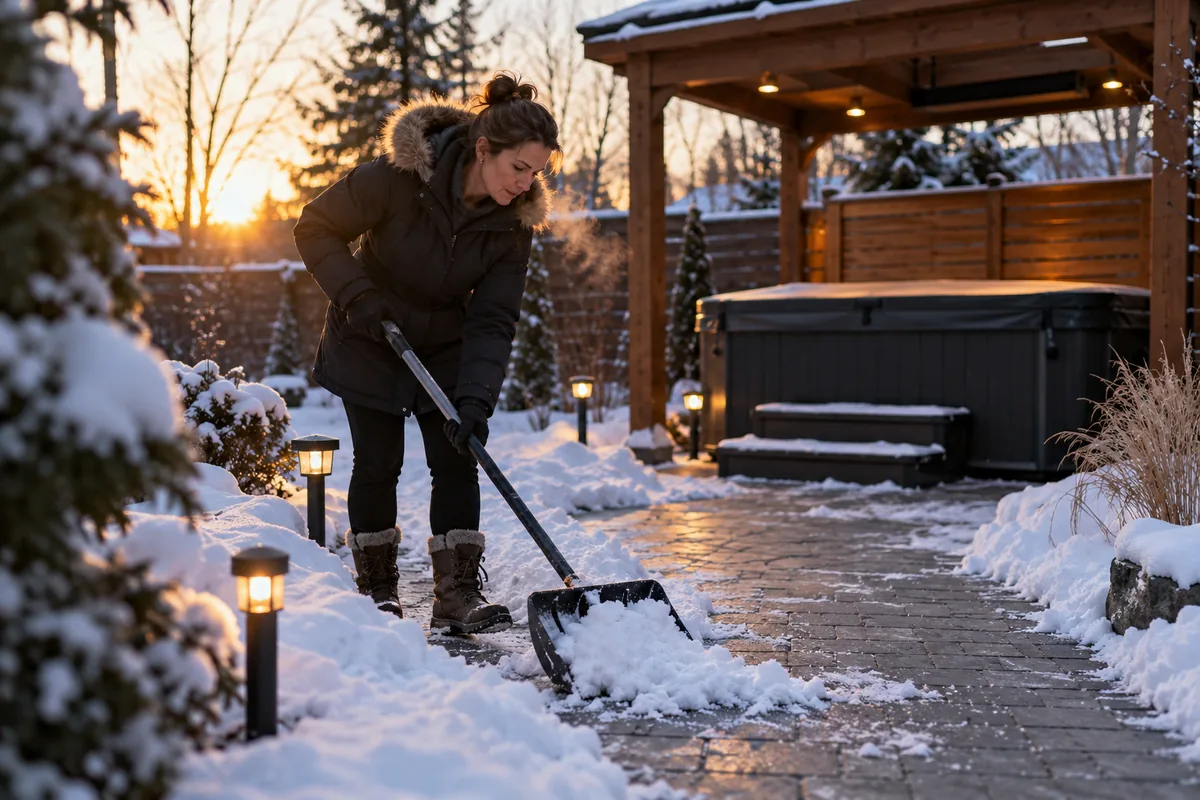
Most winter frustration with a spa has nothing to do with the water. It's the ice on the steps, a cover that's hard to lift with snow on it, or a path nobody wants to clear. This is the part a builder plans, and it's where the two options pull apart most.
The route from the back door
For a swim spa or hot tub in an Ontario winter, think about the walk in boots and again in wet feet. A short, sheltered, well-lit path with grippy steps is far easier to live with than a long open one. Good outdoor lighting for winter paths earns its place here, because it's dark by dinnertime for much of the season.
The base and the structure
A hot tub can sit on a purpose-built pad or, with the right framing, on a deck. We cover that side in our post on how a hot tub changes deck framing. A swim spa is a bigger and heavier project, so ask the maker for the filled weight and the base it needs, and get that checked by a qualified professional before the ground is touched.
Power, safety and permits
Electrical work for a spa is not a handyman job. The Electrical Safety Authority publishes resources for pool, tub and spa installers about electrical inspections in Ontario, and your electrician and municipality will tell you what applies at your address. Enclosure and permit rules also vary by town, so check with your local building department early (checked October 2026).
If it helps, our team plans outdoor spaces across the area, including outdoor living projects in Barrie and backyard projects in Aurora, and the same questions come up in both.
Good to know
This article is general information, not professional advice. Product specifications, electrical requirements, permits and costs vary by manufacturer, municipality and property, and they change over time. Confirm the details for your home with the product maker, a licensed electrician, your municipality and a qualified builder before you decide. Diamond Decks & Pools is not responsible for decisions made solely on the basis of this article.
Questions to ask before you choose
- How often will I really use it between December and March, and for how long?
- What does the maker's own guidance say about cold weather for this exact model?
- How is the cover lifted and stored, and what do I do when there's snow on it?
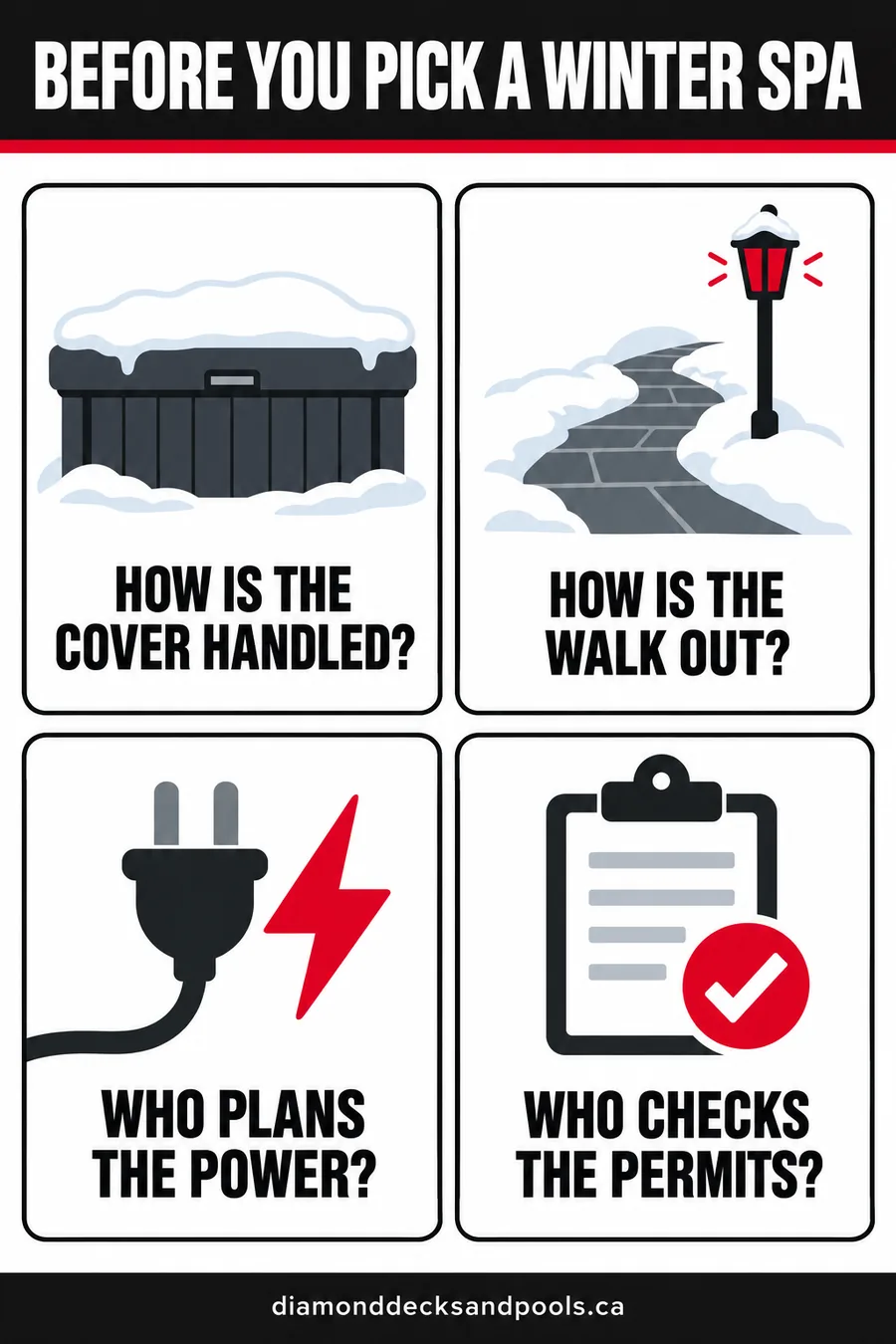
- Who plans the base, the power and the path, and who checks the permits?
- Where will the water go when I drain it, and when would I do that?
- What's the plan if the power goes out on a very cold night?
Before you settle on a swim spa vs hot tub for an Ontario winter, a short video from a spa maker lays out the difference in plain terms:
Conclusion: pick for your habits, then plan the space
Choosing a swim spa vs hot tub for an Ontario winter isn't a contest. If you want a quick, warm soak and have a modest spot close to the house, a hot tub is the simpler project. If you want to swim or train through the season and you have the room and the budget for a bigger base, a swim spa can suit you. Either way, the cover, the path and the power decide how it feels in January.
Planning a spa area, a deck around it or a safe path to the door? Our deck design and build team can map it out with you.
Planning a winter-ready spa area?
Tell us what you have in mind and we'll talk through the space, the path and the structure around it.
Frequently asked questions
Can you use a swim spa or hot tub in an Ontario winter?
Makers say it can be done: Master Spas publishes winter guidance for swim spas, and Hot Spring publishes winter tips for hot tub owners. How well it works for you depends on the model, the cover, the power supply and the path to it, so ask your supplier what they recommend for cold weather.
Which costs more to run in winter?
It depends on the model, the insulation, the cover, the water temperature you keep and your local electricity rate. A larger tub holds more water to keep warm, but that's not a number we can promise. Ask the supplier for their operating guidance and check it against your own rates.
Do I need a permit for a hot tub or swim spa?
Rules vary by municipality and by how it's installed. Electrical work involves inspection in Ontario, and some towns have enclosure or permit rules for spas and pools. Call your local building department before you order, and ask your electrician about the electrical side.
Can a hot tub go on a deck?
Sometimes, with the right framing. A filled spa is a concentrated load, so the deck has to be planned for it. Our post on hot tub deck framing explains what a designer checks, and a qualified professional should confirm the details for your site.
How should I plan the path to a winter spa?
Keep it short, sheltered and well lit, with steps that grip when wet. Plan where snow will be cleared and stored so the route stays usable on the coldest evenings.
