
 Decks
Decks Pools
Pools Stonework
 Outdoor Structures
 Outdoor Living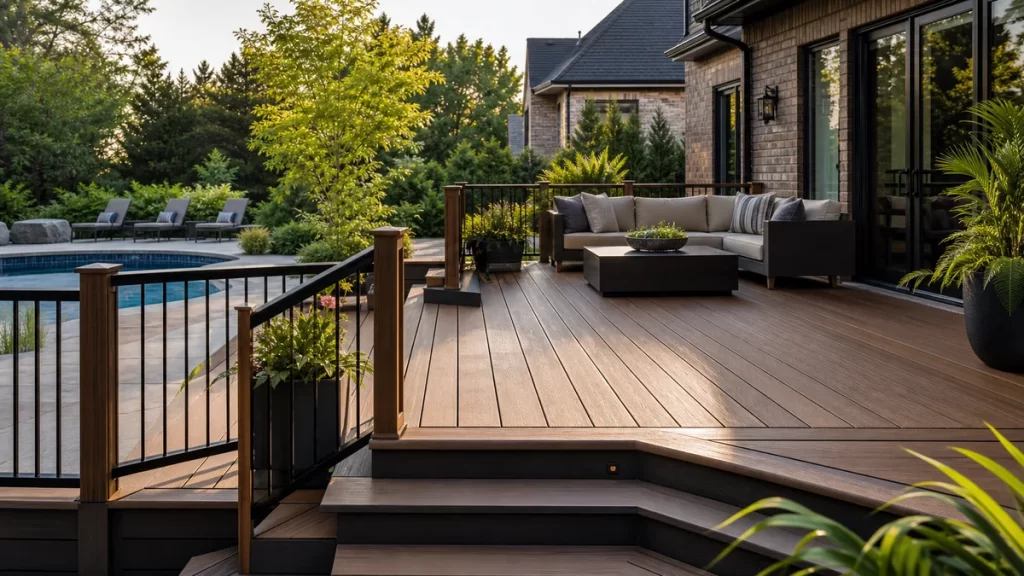
Updated August 2026
A low-maintenance deck is not created by choosing one board and ignoring everything around it. The frame, railings, borders, lighting, planting, furniture, drainage, and access all influence how much work the space requires over time.
Choose the Surface Around Real Expectations
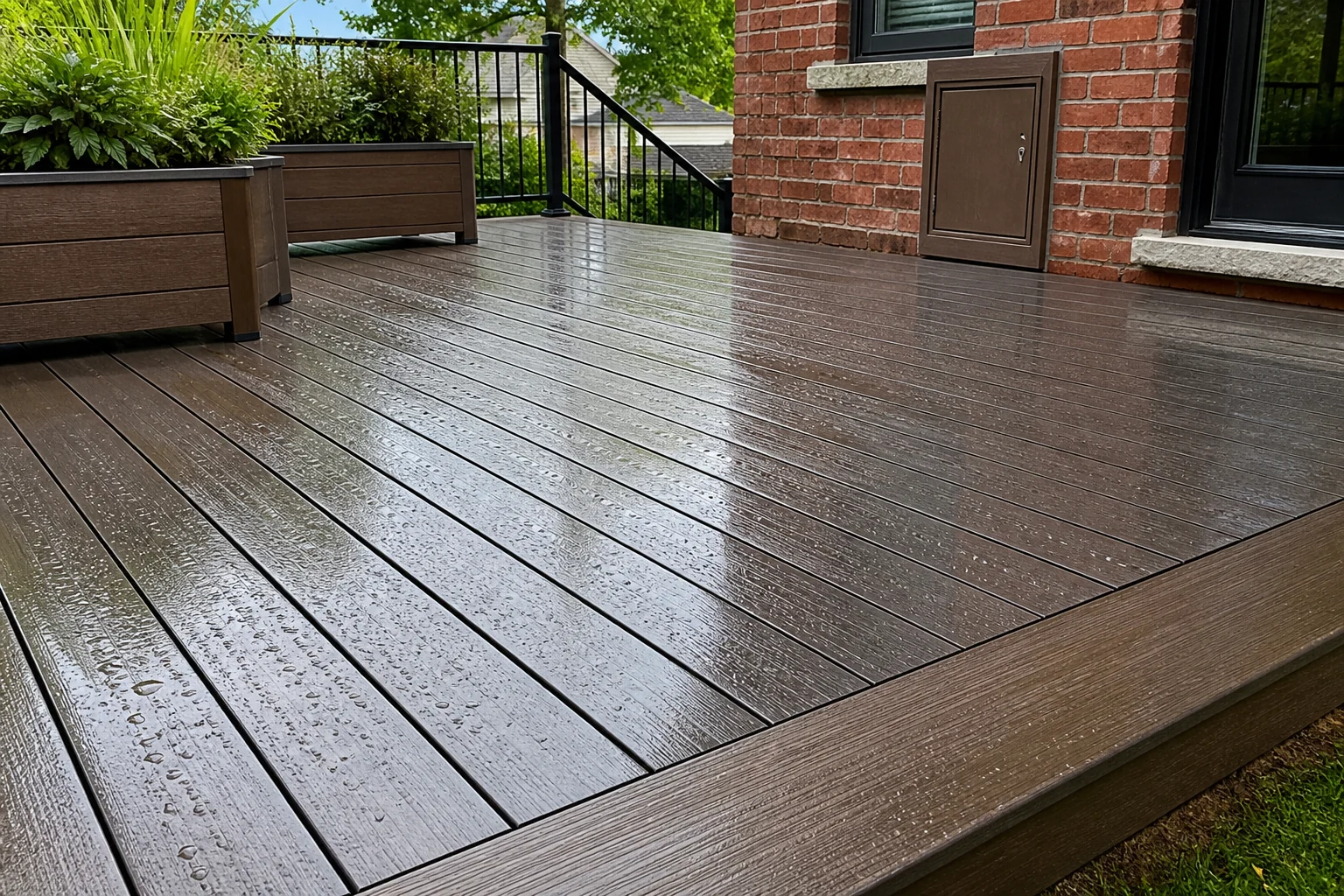
Capped composite and PVC decking avoid the sanding and staining associated with natural wood, which is why they are common low-maintenance choices. They still need periodic cleaning, prompt attention to spills, and care that follows the exact manufacturer’s instructions.
Natural wood can remain a valid choice when its weathering and finish schedule are understood. The right material is the one whose appearance, comfort, budget, and recurring care fit the household. Compare composite, PVC, and wood systems before deciding.
Reduce Dirt-Trapping Details
Borders, inlays, planters, benches, and skirting can add design value, but every junction can collect leaves and make cleaning harder. Use details where they improve the composition and ensure that drainage and access remain clear.
Avoid narrow unusable spaces beside the house or between permanent features. A vacuum, brush, or hose should be able to reach common debris areas without dismantling furniture or trim.
Compare Railings and Privacy Features
Aluminum railings are durable and do not need wood stain, while glass preserves views but shows dust, pollen, water spots, and fingerprints. Wood guards and screens may need finishing. Cable and specialty systems have their own cleaning, tension, and code considerations.
Choose around exposure and expectations. A full glass guard beside a pool may need frequent cleaning; glass used only at a key view may achieve the design goal with less work. Privacy screens should allow access to both faces where care is required.
Keep Water and Debris Moving
Provide the board gaps, ventilation, grading, and drainage required by the selected system. Direct downspouts and roof runoff away from vulnerable areas. Do not allow mulch, soil, or planting to bury structural elements or remain pressed against trim.
Trees provide valuable shade but can increase leaves, pollen, fruit, and sap. The solution is not to remove every tree. Place gathering areas and select planting with an honest understanding of the maintenance each creates.
Plan Lighting and Utilities for Access
Integrated lighting can be reliable and clean-looking when wiring, transformers, connections, and replaceable fixtures remain accessible. Concealed systems that require opening finished fascia for routine service are not truly low maintenance.
The same applies to gas, irrigation, hot tub equipment, and under-deck drainage. Design removable access panels and keep shutoffs identifiable. Photograph concealed routes before surfaces close and store product documentation.
Create a Simple Seasonal Routine
A low-maintenance deck benefits from a spring and fall check. Remove debris, wash according to product guidance, inspect guards and stairs, clear drainage, and review furniture feet or mats for trapped moisture and discolouration.
Small, predictable tasks prevent neglected buildup from becoming a larger project. The goal is not zero care; it is an outdoor space that remains attractive without dominating weekends.
Compare Maintenance Across the Whole Deck
The board surface is only one part of the care routine. Glass guards show water spots. Elaborate skirting can collect leaves. Deep planters can stain surfaces or obstruct airflow. An outdoor kitchen introduces grease and appliance maintenance. Review each component according to how often it needs cleaning, refinishing, adjustment or replacement.
A restrained design can still feel custom. Use one strong border, align railing posts and stairs, and repeat the home’s metal and masonry tones. Spending detail where it clarifies the composition creates a more considered result than adding many junctions that are difficult to keep clean.
| Component | Lower-maintenance direction | Still requires |
|---|---|---|
| Decking | Capped composite or PVC system | Cleaning and periodic inspection |
| Guards | Powder-coated aluminum | Washing and connection checks |
| Privacy | Aluminum or selected manufactured systems | Cleaning and hardware access |
| Lighting | Integrated outdoor-rated fixtures | Lens cleaning and serviceable drivers |
| Planting | Right-sized, non-messy plants | Watering, pruning and seasonal care |
Design the Surrounding Yard for Easier Care
Place trees and large shrubs with mature canopy and debris in mind. Give planting enough soil and irrigation so it does not fail and leave bare, muddy edges beside the deck. Use a defined stone or planting transition instead of allowing soil and mulch to wash against fascia or structural posts.
Direct downspouts away from the deck and preserve access below where inspection may be needed. If storage is planned, choose locations that stay dry enough for the intended items and can be emptied without moving the main furniture. Good maintenance begins with being able to reach what needs attention.
- Avoid placing outdoor rugs or planters where moisture remains trapped.
- Choose furniture feet that will not stain or scratch the surface.
- Keep gaps, drains and under-deck access clear.
- Use removable panels where utilities or structure need service.
- Follow the exact product care guide rather than general online advice.
Common questions
What deck material requires the least maintenance?
Capped composite and PVC generally avoid recurring staining, but every exterior surface needs cleaning and inspection. Compare exact products and care instructions.
Is composite decking maintenance-free?
No. It is lower maintenance than routinely finished wood, but dirt, organic debris, food spills, snow, and approved cleaning methods still need attention.
Are glass railings low maintenance?
They are durable but can require regular cleaning, especially near pools, trees, irrigation, or busy seating areas. Use glass where the preserved view justifies that care.
What railing is easiest to maintain?
Powder-coated aluminum is a common lower-maintenance choice, although it still needs washing and connection checks. Glass preserves views but usually needs more frequent cleaning to look its best.
Can a low-maintenance deck still include planting?
Yes. Choose plants for the available light, soil and mature size, and position containers or beds so water, soil and fallen material can be managed without staining or blocking deck ventilation.
Build Lower Maintenance Into the Whole Design
We compare surfaces, railings, details, drainage, lighting, and landscaping so the finished space is easier to own.
