 Decks
Decks Pools
Pools Stonework
 Outdoor Structures
 Outdoor Living
RESTORE THE STONEWORK YOU ALREADY HAVE
Interlock Repair
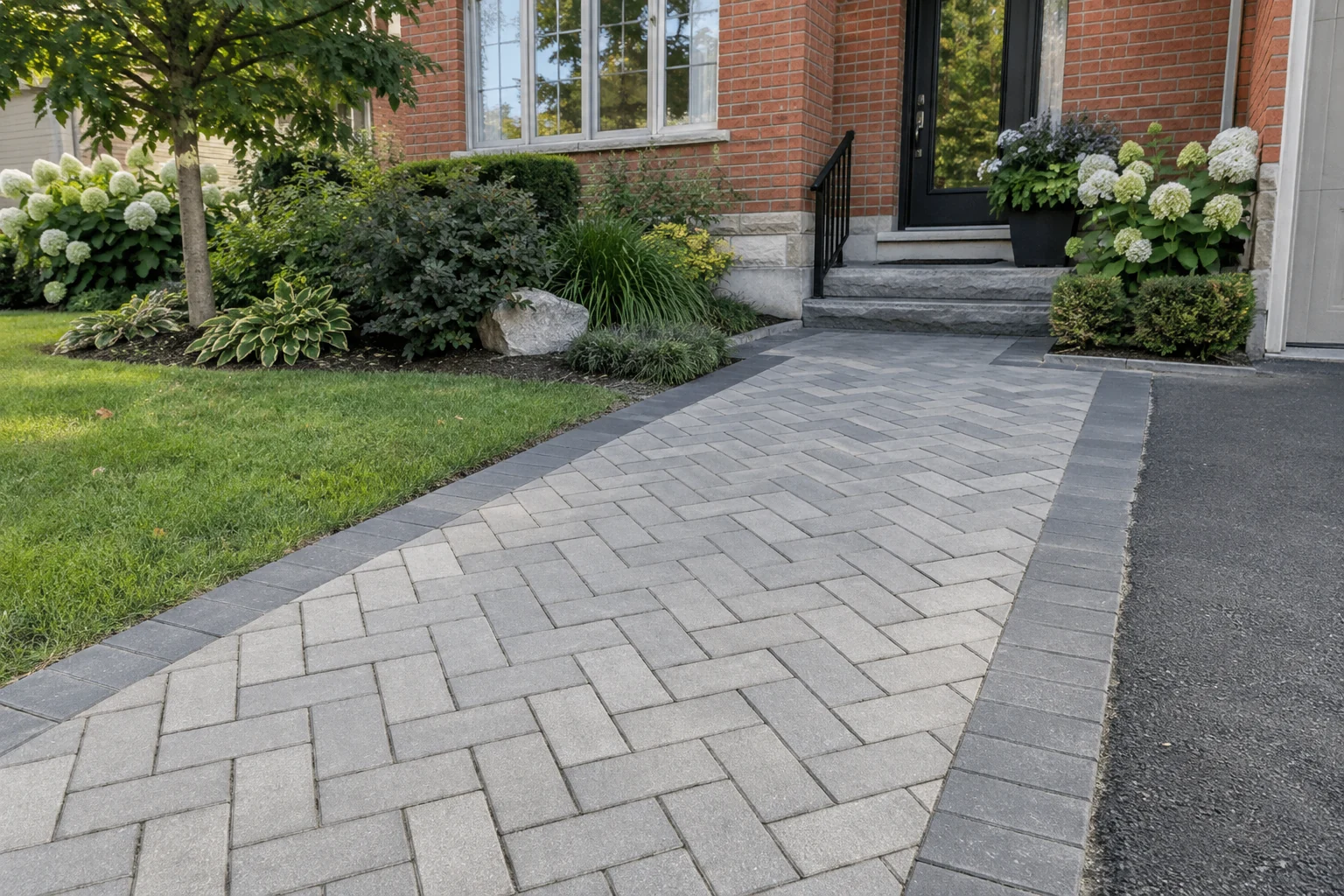
Sunken pavers, loose borders or water collecting where it should not? Restore a more even, dependable surface with repairs that start below the stone.

RESTORE THE STONEWORK YOU ALREADY HAVE
Sunken pavers, loose borders or water collecting where it should not? Restore a more even, dependable surface with repairs that start below the stone.
KEEP WHAT WORKS. CORRECT WHAT DOES NOT.
A low spot in the driveway or a rocking patio stone does not always mean the whole surface needs replacing. When the pavers are sound, lifting and resetting the affected area can make better use of the materials already on your property.
Diamond Decks & Pools assesses interlock repairs across driveways, patios, walkways and entry areas. We look at the movement, the surrounding grades and the condition of the base before recommending the extent of the work.
The aim is a repair that makes sense for the whole surface: suitable support underneath, orderly joints, secure edges and a finished grade that helps water move where it should.
See our stonework design and construction services when a repair is part of a larger outdoor project.
WHAT ARE YOU NOTICING?
The visible symptom helps us decide what to inspect, but it does not tell the whole story.
Wheel-track depressions, rocking stones and raised edges can make everyday routes awkward to use. We assess the base, bedding and surrounding levels before re-levelling the affected paving.
Spreading edges or widening gaps may need more than fresh sand. We check edge restraint, paver alignment and joint condition, then identify what needs resetting, replacement or renewal.
Persistent low spots deserve a closer look at grades, downspouts and drainage routes. We assess where the water comes from and where it can go before changing the surface.
Loose stair units or a moving wall need a separate assessment. Explore stone steps and entry work or retaining wall construction for those conditions.
THE LIFT-AND-RELAY APPROACH
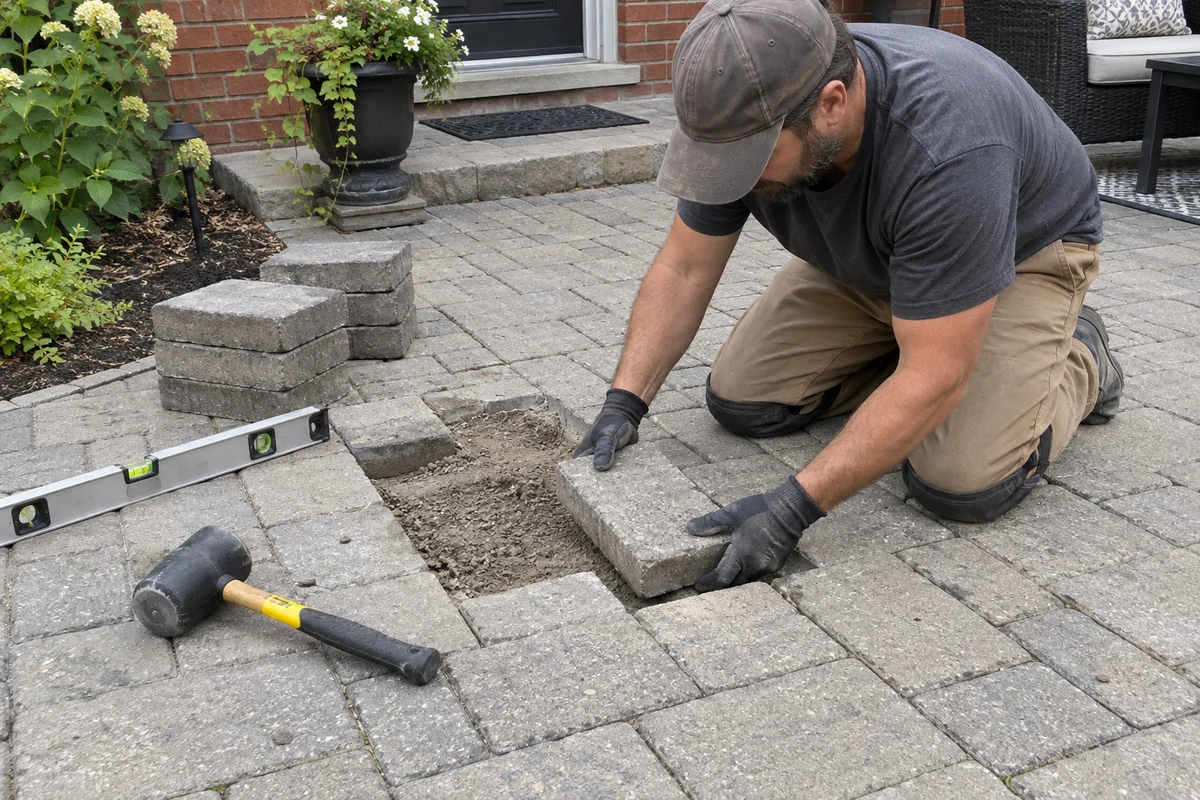
The scope should explain what will be lifted, what will be reused and what needs correcting underneath. We also identify how the repaired area will meet the paving that stays in place.
For interlock driveways, vehicle loading matters. On stone patios and walkways, we also consider furniture, foot traffic and transitions to doors and steps.
Review the movement, drainage and surrounding paving. Define the repair boundary and discuss any conditions that will only become clear once stones are lifted.
Remove the affected units and retain usable stones for reinstallation. Check damaged pieces and discuss replacement availability and likely colour differences.
Address the identified base, bedding, drainage and edge issues within the agreed scope. The assembly should suit the soil conditions and intended use, rather than a single standard depth for every repair.
Reset the paving, align the pattern and finish with suitable joint material. Review transitions, cleanup and product-specific waiting times before walking, driving or placing furniture on the area.
MAKE THE RIGHT INVESTMENT
We compare the condition of the existing paving with what you want the space to do next.
Reusing suitable paving can reduce new-material needs while retaining the character of the existing space.
A larger project may offer better value than repeated patch repairs when the underlying problem extends beyond one low spot.
Not sure which applies? Describe your interlock problem and request an assessment.
BEFORE YOU BOOK THE REPAIR
Clear expectations about appearance, scope and timing make it easier to decide what is worth repairing.
Cost depends on the affected area, access, lifting and sorting, base correction, drainage work and replacement materials. A small visible depression can involve a wider repair below the surface. We define the proposed work and explain assumptions before giving a project-specific estimate.
Often, if they are sound and suitable for the application. We assess wear, damage and the ability to retain the pattern. Replacement pavers may differ in colour or texture because of weathering, product changes or discontinued sizes. Spare stones from the original installation can be helpful, but an invisible match cannot be guaranteed.
No. Jointing material helps the paving system work, but it does not rebuild failed support underneath. Movement and drainage need assessment first. For joint renewal, preparation, joint depth, moisture conditions and curing must suit the selected product. Permeable paving needs the appropriate open-graded joint aggregate, not a blanket application of polymeric sand.
Cleaning and sealing should be discussed as separate parts of the scope. Neither corrects settlement, and not every paver needs a sealer. Existing coatings, stains, surface condition and the desired finish influence product selection. Any sealing needs to respect the jointing product’s curing requirements and the paver manufacturer’s guidance.
Yes, we can assess an existing installation. The proposed repair will depend on what can be inspected, the condition of the materials and what is found beneath the lifted area. We explain the agreed repair boundary and any limitations rather than treating untouched paving as newly built.
That depends on the repair and finishing materials. Foot traffic, vehicle use, joint curing and any sealer may have different waiting times. Weather also affects scheduling. We confirm when the area can reopen instead of promising the same turnaround for every project.
Frozen or saturated ground can prevent suitable preparation, and jointing or sealing products have temperature and weather limits. We schedule permanent repairs around site conditions and the selected materials. If a loose or raised area is creating a trip hazard, keep it out of use while arranging an assessment.
Diamond provides a five-year workmanship warranty, WSIB coverage and $5 million in liability insurance. We explain coverage for the agreed repair work in your proposal. Read our workmanship warranty information for more detail.
LET’S LOOK AT WHAT CAN BE SAVED
Share your location, the approximate area and what you are noticing. Photos of the surface, nearby steps and any puddling will help the conversation when we follow up.
Based in Bradford, we serve Toronto, York Region and surrounding communities. Check our service areas or ask about your address.
Prefer to talk?
(289) 552-1335