
 Decks
 Pools
 Stonework
 Outdoor Structures
 Outdoor Living
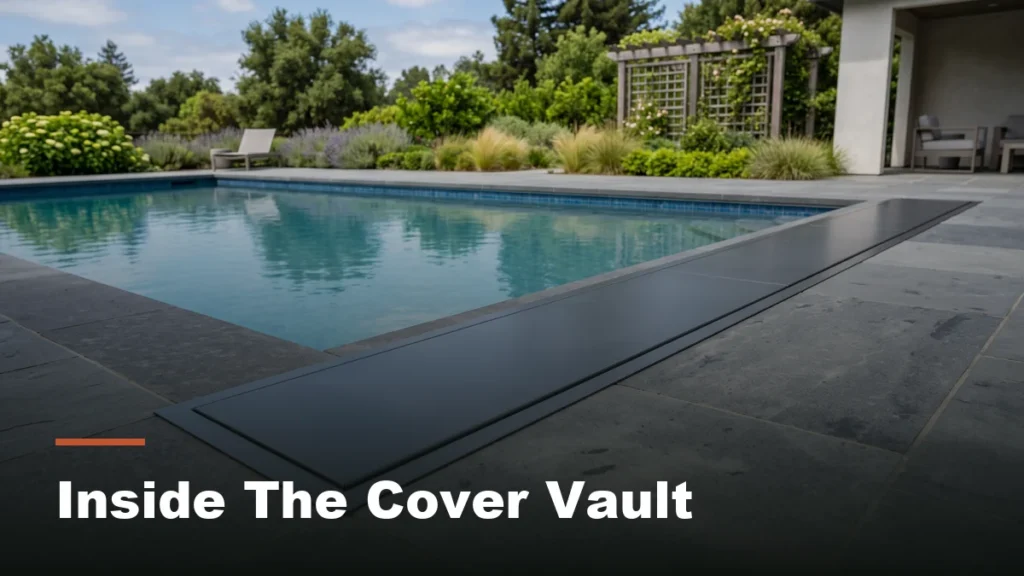
Why does the vault under your automatic pool cover system seem to fill with water every time it rains? It is tempting to assume something has failed, but in most cases the vault is doing exactly what any underground box built into a backyard will do: collecting whatever lands on top of it. What separates a vault that stays workable from one that turns into a swamp every fall is good automatic pool cover vault drainage, not luck.
This is the part of an automatic cover that almost nobody asks about at the sales stage and almost everybody asks about a year or two later. Here is what our crews wish more customers understood before that first soggy October.
What the vault actually is
On most inground pools, an automatic cover does not just sit on a reel beside the water. It retracts into a recessed housing, usually called the vault or the track box, built into the deck at one end of the pool. The cover, the motor, the drive mechanism, and sometimes a pump all live down in that space, under a removable lid at deck level.
People often ask
Does every automatic cover need a below-deck vault? No. Some systems mount to the deck surface with the mechanism enclosed in a low track along the edge instead of a recessed vault below the deck. A vault is more common on new-build inground pools where the deck can be designed around it from the start. Ask your installer which configuration your system actually uses before assuming everything in this article applies the same way.
That housing is essentially a hole in the ground next to your pool, and holes in the ground collect water. Rain runs off the surrounding deck and landscaping, groundwater can seep in through the sides, and in winter, snowmelt adds another source entirely. None of that means the vault was built wrong. It means the vault needs somewhere for that water to go.
What good automatic pool cover vault drainage looks like
Automatic pool cover vault drainage is not one single feature, it is the combination of a few things working together: a way for water to leave the housing, a lid that keeps most new water from getting in, and a maintenance habit that keeps the drainage path from clogging. Get any one of those wrong and the other two end up doing more work than they were designed for.
The goal is not a bone-dry vault every single day. A small amount of standing water after a heavy storm is normal on most systems. The goal is a vault that drains back down within a reasonable stretch of dry weather. A vault that stays full and keeps the motor and mechanism sitting in water indefinitely is the pattern worth fixing.
Drain line vs. cover pump
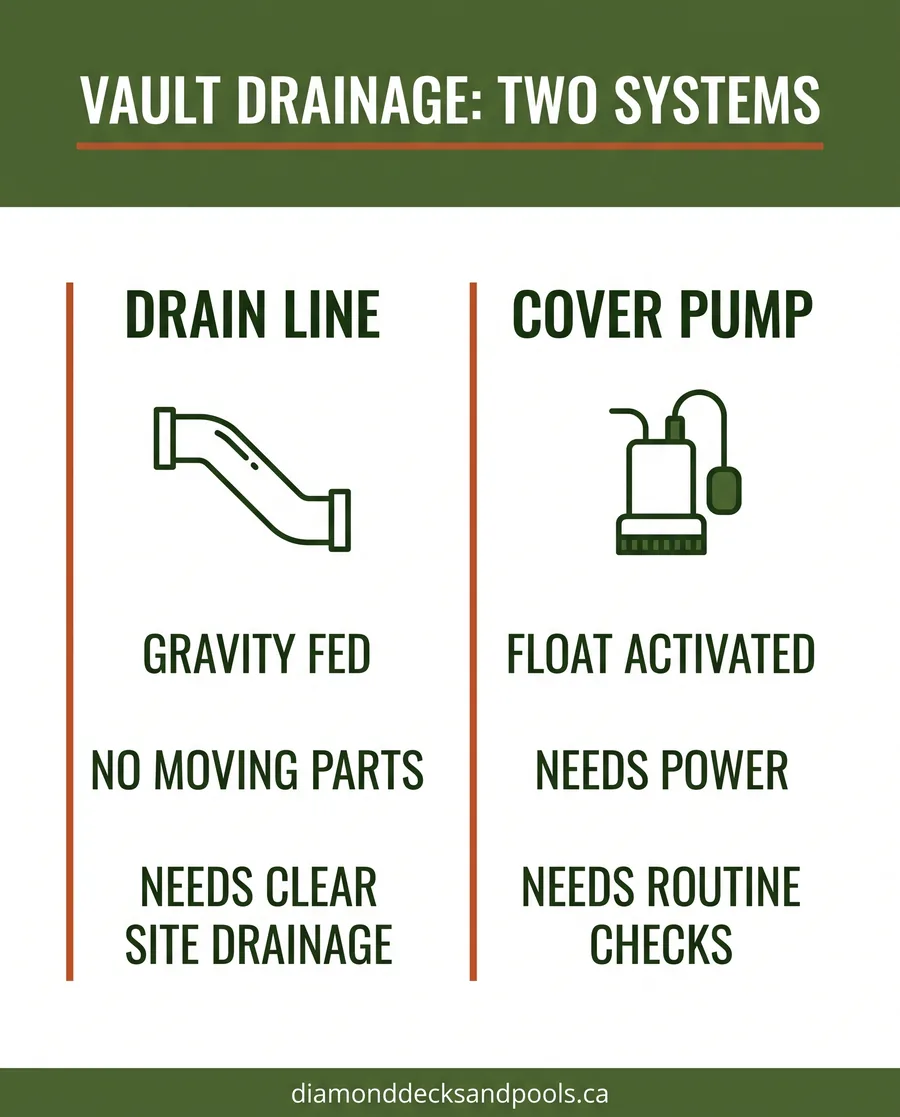
Every automatic pool cover vault drainage setup we see falls into one of two camps, and knowing which one yours is changes what you should expect to do about it. A gravity drain line ties the vault into your property's storm or weeping-tile drainage and moves water out with no moving parts and no power required, which is the lower-maintenance option where the grading and drainage on the lot allow for it.
The alternative is a cover pump: a small submersible or float-activated pump that switches on once water reaches a certain depth in the housing and pushes it out through a hose. A pump works on lots where gravity drainage was not practical to install, but it depends on power, on the pump itself staying clean, and on someone noticing if it stops working. Manufacturer manuals we reviewed for this article are consistent on one point: any drain in the housing needs to be kept clear of debris for the system to work as intended, according to Cover-Pools' own owner's manual.
Debris does more than clog the drain
Leaves, seed pods, and the general grit that blows across a backyard do not stay politely on top of the pool cover. Some of it works its way down into the vault along with the rolled-up cover fabric itself. There it can block a drain opening, jam a float switch on a cover pump, or simply sit against the mechanism and hold moisture against metal parts longer than they would otherwise see.
Pro tip
Automatic pool cover vault drainage problems often show up first as a pump that runs constantly, or one that has gone quiet when it should be cycling after rain. Either behaviour is worth a look before you assume the whole cover system is at fault.
A quick visual check of the vault lid area after a big storm, or before you close the cover for an extended stretch, catches most debris problems while they are still a five-minute fix, well before they turn into a service call.
Winterizing the vault, not just the pool
Most winterizing advice focuses on the pool itself: water level, chemistry, the cover fabric. The vault deserves its own pass. Fall is when leaf litter is heaviest and rain is frequent, which is exactly the combination that overwhelms a drain line or a pump that has not been checked all summer. Clearing debris from the housing and confirming the drainage path is working before the first hard freeze matters more than most homeowners expect.
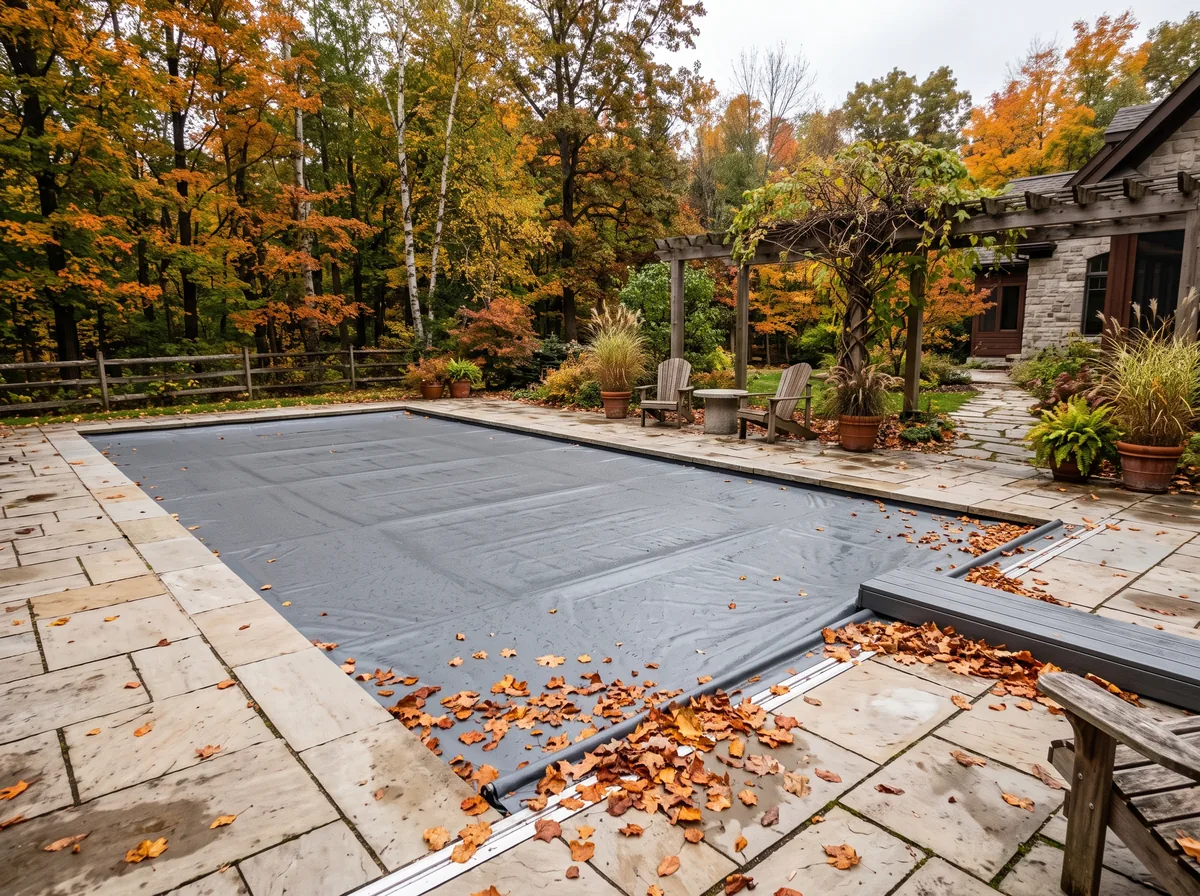
Standing water that freezes inside the housing can expand against the mechanism and hardware in ways that a well-drained vault never has to deal with. If your fall closing checklist does not already include a look inside the vault, this is a good year to add it, alongside the winterizing steps our team covers in more detail for the rest of your deck and outdoor living space.
Where the motor and electrical connections sit
The cover's drive motor and its electrical connections live down in the vault as well, which is exactly why drainage is not just a housekeeping issue. This is a safety topic, not a do-it-yourself one. Pool equipment wiring, bonding, and any grounding around water are governed by Ontario's Electrical Safety Code and should be handled by a licensed electrical contractor, not adjusted by a homeowner. Ontario's Electrical Safety Authority is a useful starting point if you want to understand what a licensed contractor is actually checking around a pool.
None of this means a bit of water in the vault is automatically an emergency. It means standing water is a reason to get the system looked at, not something to leave alone and hope it resolves itself.
What to check yourself vs. what to call in
- Owner check: visually confirm the vault lid is seated properly and not letting rain pour straight in
- Owner check: clear leaves and debris off the cover and away from the housing edges after storms
- Owner check: notice whether a cover pump is cycling normally or running nonstop
- Call your pool company: standing water that has not gone down days after the rain stopped
- Call a licensed electrical contractor: anything involving the motor wiring, the control box, or a tripped breaker near the pool
That split, homeowner eyes on the surface, a professional on the mechanism and the wiring, is what keeps automatic pool cover vault drainage from becoming a bigger project than it needs to be.
Good to know
This article offers general information about automatic pool cover vaults and is not a substitute for your system's own owner's manual or a visit from your pool company. Electrical work on pool equipment should always be performed by a licensed electrical contractor in accordance with the Ontario Electrical Safety Code.
Download the free quick guide
A one-page list of questions to work through with your pool company before and after the season.
Frequently asked questions
Does every automatic pool cover need vault drainage?
Every below-deck vault benefits from a working drainage path, but how that drainage is built varies by installation. Some systems rely on a gravity drain line tied into the property's storm or weeping-tile drainage, others use a small cover pump, and a deck-mounted track system without a recessed vault has different considerations altogether. Ask your installer which setup applies to your pool rather than assuming one standard answer covers every system.
Can I just run a sump pump in the vault permanently?
A pump can be part of a normal automatic pool cover vault drainage setup, but running one continuously usually signals that something upstream, grading, a blocked drain line, or a failed float switch, needs attention rather than a permanent workaround. Have your pool company confirm what your system's manufacturer actually recommends before treating a pump as the whole solution.
Is the motor safe if the vault has some water in it?
Manufacturer documentation we reviewed notes that these motors are generally built to tolerate brief water contact but not extended submersion, and that the housing should have adequate drainage so drains stay clear. Treat any standing water that lingers for more than a day or two as a reason to call your pool company rather than something to wait out.
Who do I call if the vault will not drain?
Start with your pool company or the original installer, since they can tell you whether the issue is debris, a failed pump, or a drainage line problem specific to your lot. If the question involves the motor wiring, the control box, or anything electrical near the pool, that part of the job belongs with a licensed electrical contractor, not a general handyman fix.
If you already own an automatic cover, the most useful next step is simply finding out which drainage setup your vault actually has. Your original installer or your pool company can tell you in a few minutes, and that single answer decides almost everything else about how you maintain it.
Our team works across Bradford, Barrie, Innisfil, Newmarket, and the rest of Simcoe County and the GTA on both new pool builds and the equipment that goes with them. Get a free quote and we will walk through what your specific setup needs.
