
 Decks
Decks Pools
Pools Stonework
 Outdoor Structures
 Outdoor Living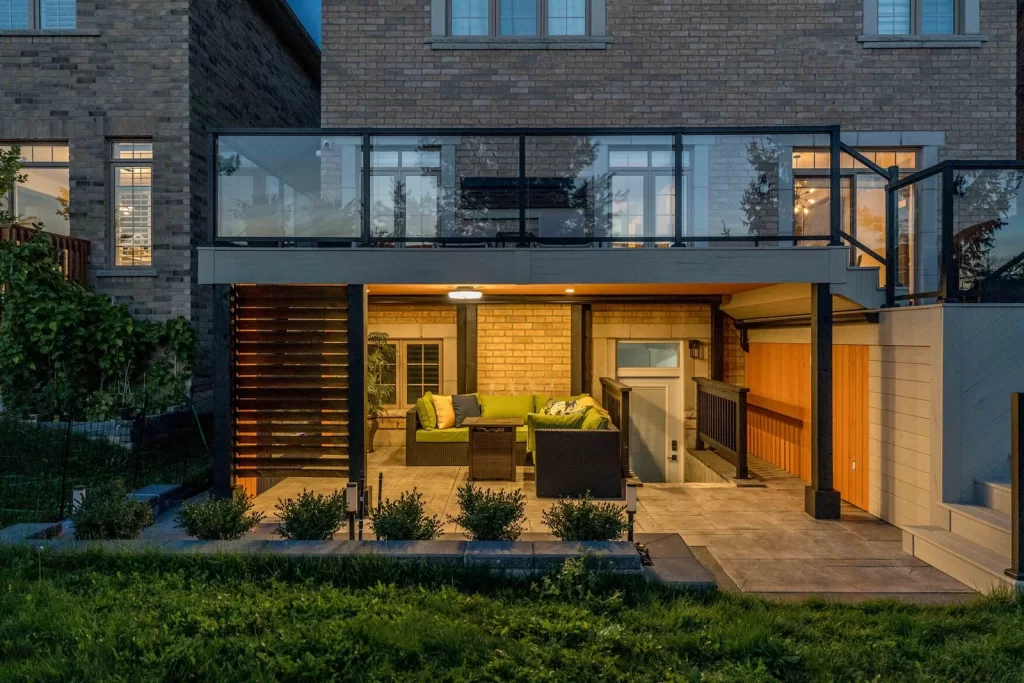
Updated August 2026
Comfortable outdoor lighting is not created by making the backyard bright. It comes from placing the right amount of light at steps, paths, gathering areas, structures, and selected landscape elements while controlling glare and spill.
Build the Lighting Plan in Layers
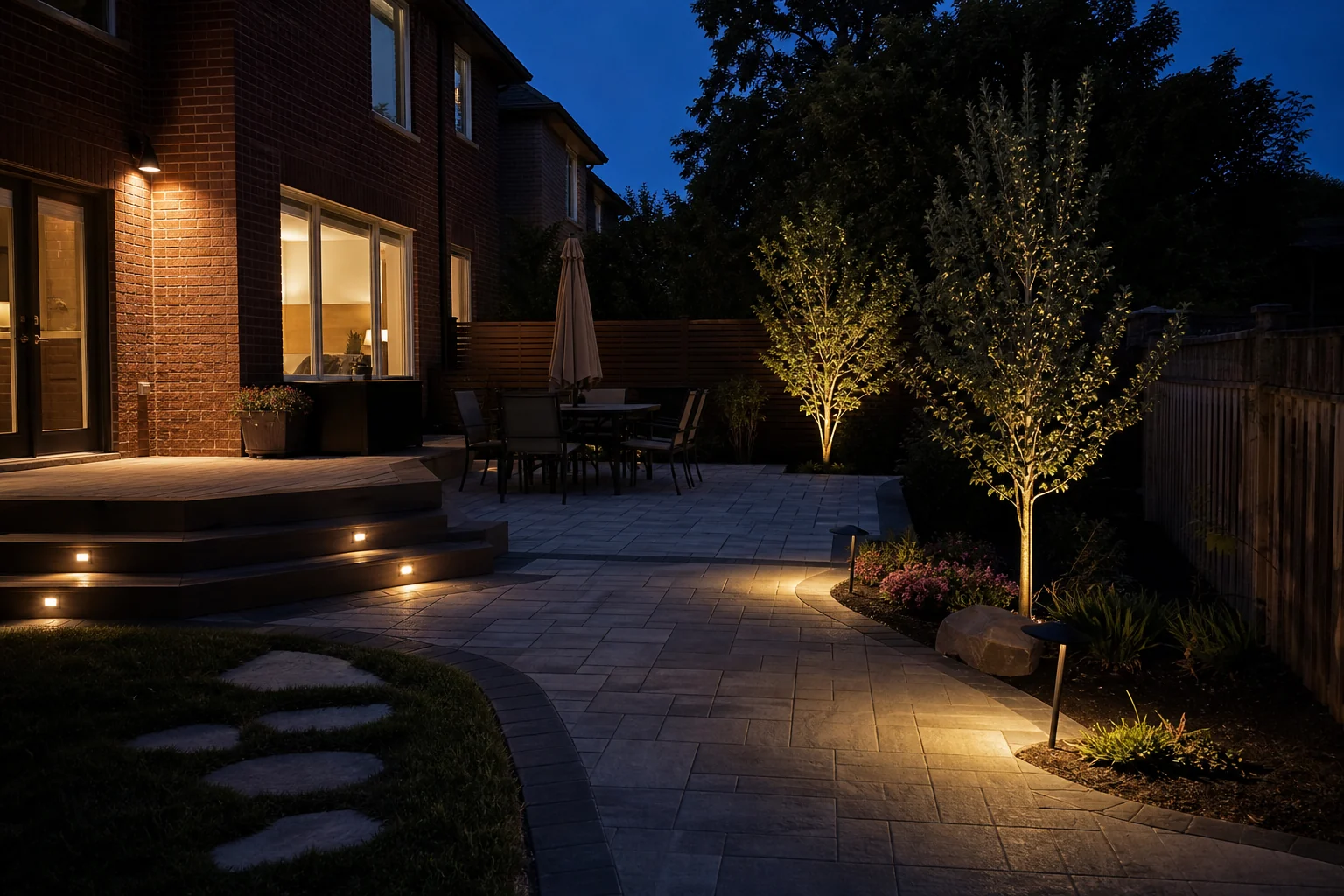
Safety lighting helps people understand steps, landings, path edges, gates, and changes in material. Ambient lighting supports dining and conversation. Accent lighting draws attention to a tree, textured wall, pergola, or water feature. The three layers should work together without competing.
Start with the tasks and routes used every evening. Decorative accents can then add depth beyond the patio so the yard does not disappear into darkness.
Control Glare at Eye Level
A visible bright source can make surrounding areas harder to see. Shield fixtures, aim them carefully, and test common seated views from dining and lounge areas. Be considerate of neighbouring windows and public paths.
Under-rail and step fixtures can provide useful low-level light when spacing and output are controlled. Downlighting from a pergola or structure often feels more natural than a fixture aimed directly across the patio.
Choose Colour and Output for Comfort
Warm light generally complements wood, brick, stone, planting, and fire features. Cooler or inconsistent colour temperatures can make a residential patio feel clinical. More lumens are not automatically better; surfaces and fixture optics determine how the light is perceived.
Use consistent colour where fixtures are seen together. Dimming can help a dining or lounge area adapt between practical tasks and relaxed evenings.
Coordinate Deck, Patio, and Landscape Fixtures
Deck step lights, path lights, wall lights, tree accents, and pool-area lighting should share a visual hierarchy. Repeating one finish or fixture family can create consistency, but each location still needs the correct performance and rating.
Integrate the plan with professional outdoor lighting, deck framing, stonework, planting, irrigation, and drainage. Conduit routes are easier and cleaner before hard surfaces and gardens are finished.
Use Controls That Match Daily Life
Separate essential circulation lighting from decorative accents so the homeowner does not need the entire yard illuminated for a short trip outside. Timers, photocells, switches, dimmers, and compatible smart controls can support different routines.
Avoid an overcomplicated control scheme that no one remembers. Label zones, keep manual control available, and choose components suitable for the electrical system and exterior environment.
Plan for Maintenance and Growth
Outdoor fixtures collect soil, insects, mineral deposits, leaves, and snow. Plant growth can block or redirect light over time. Locate fixtures where lenses can be cleaned, aims adjusted, and components serviced without damaging the garden.
Keep transformers, drivers, and connections ventilated and accessible according to their requirements. Photograph concealed conduit and cable routes before construction closes, then revisit fixture aim as planting matures.
Give Every Lighting Zone a Job
Organize the plan around tasks rather than fixture counts. The route from the house needs dependable orientation. Stairs and grade changes need clear edges. Dining needs gentle light that does not shine into faces. Planting may need only a few accents to create depth. Once each zone has a job, unnecessary fixtures become easier to remove.
Around pools, spas and hot tubs, electrical requirements and product markings need specific attention. Coordinate the design with qualified electrical professionals and current Ontario requirements before fixtures, transformers or wiring routes are selected.
| Lighting zone | Purpose | Useful control |
|---|---|---|
| Doors and main route | Safe everyday movement | Switch or automatic evening control |
| Steps and edges | Reveal changes in level | Grouped with circulation lighting |
| Dining and lounge | Comfortable faces and surfaces | Separate dimmable zone where compatible |
| Trees and masonry | Create depth and a focal point | Independent accent zone |
| Service and cooking | Support a specific task | Brighter local control used only when needed |
Commission the Lighting After Dark
A lighting plan is not finished when the fixtures turn on. Review it after dark from the patio, inside the house and at the property edges. Aim adjustable fixtures, reduce glare, balance overly bright zones and confirm that steps remain readable when decorative lights are off. Check whether light spills toward neighbouring windows or creates reflections in glass.
Repeat the review after planting has grown or furniture changes. Tree canopies, ornamental grasses and seasonal containers can block or redirect light. A system with accessible fixtures and separated controls is easier to tune than one fixed at maximum output.
- Use warm, consistent light unless a task requires otherwise.
- Shield sources from seated eye level.
- Keep essential circulation lighting on its own practical control.
- Leave transformers, drivers and connections serviceable.
- Photograph aiming positions and label zones for future maintenance.
Common questions
What colour temperature is best for a patio?
Warm light is commonly comfortable around residential patios, wood, brick, and planting. The final choice should consider fixture type, surrounding finishes, and other exterior lighting.
How many outdoor lights do I need?
There is no useful universal number. The plan should cover specific steps, paths, tasks, gathering areas, and selected accents without creating glare or unnecessary brightness.
When should outdoor lighting be planned?
Plan it with the deck, patio, structures, and planting. Early coordination protects conduit routes, transformer locations, fixture access, and clean installation details.
Should patio lights be dimmable?
Dimming can be useful in dining and lounge areas when the selected outdoor fixtures, drivers and controls are compatible. Essential step and path lighting should remain reliably visible rather than depending on one decorative setting.
Why should outdoor lighting be tested from inside the house?
Exterior fixtures can create glare and reflections through windows. Viewing the system from common interior rooms helps balance the outdoor scene and prevents a bright source from dominating the night view.
Plan Lighting as Part of the Outdoor Architecture
We coordinate fixtures, controls, deck details, stonework, structures, and planting so the backyard remains comfortable after dark.
