
 Decks
Decks Pools
Pools Stonework
 Outdoor Structures
 Outdoor Living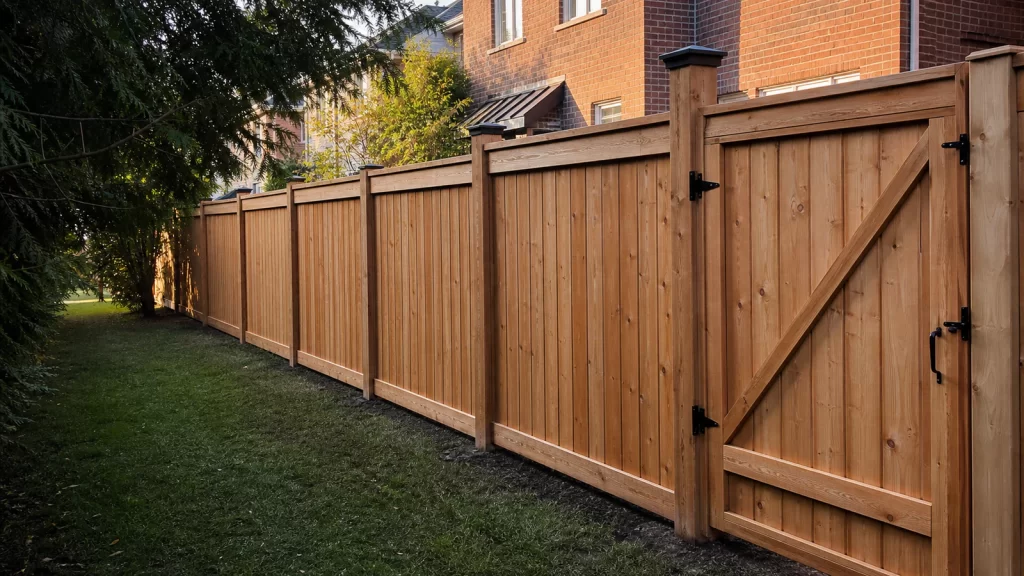
Updated August 2026
A fence is part boundary, part structure, and part daily-use feature. The right style depends on why it is needed, what the site exposes it to, how gates will work, and how much maintenance the owner is prepared to perform.
Start With the Fence's Jobs
List the non-negotiable functions: privacy beside a patio, a secure pool enclosure, a safe area for children or pets, a defined property edge, wind reduction, or a more finished view. A solid privacy fence may be appropriate at the rear lounge while a more open fence preserves a garden view elsewhere.
Consider both sides of the fence and the views from inside the home. The goal is to solve the property’s needs, not repeat one panel around every boundary by default.
Compare Wood, Vinyl, and Metal
Wood offers natural character and broad customization, but it weathers and may require cleaning, repairs, and refinishing. Vinyl avoids wood stain and rot, but product quality, colour, movement, impact, expansion, and repair methods should be reviewed. Metal systems preserve sightlines and can provide a refined pool or garden boundary, with less privacy.
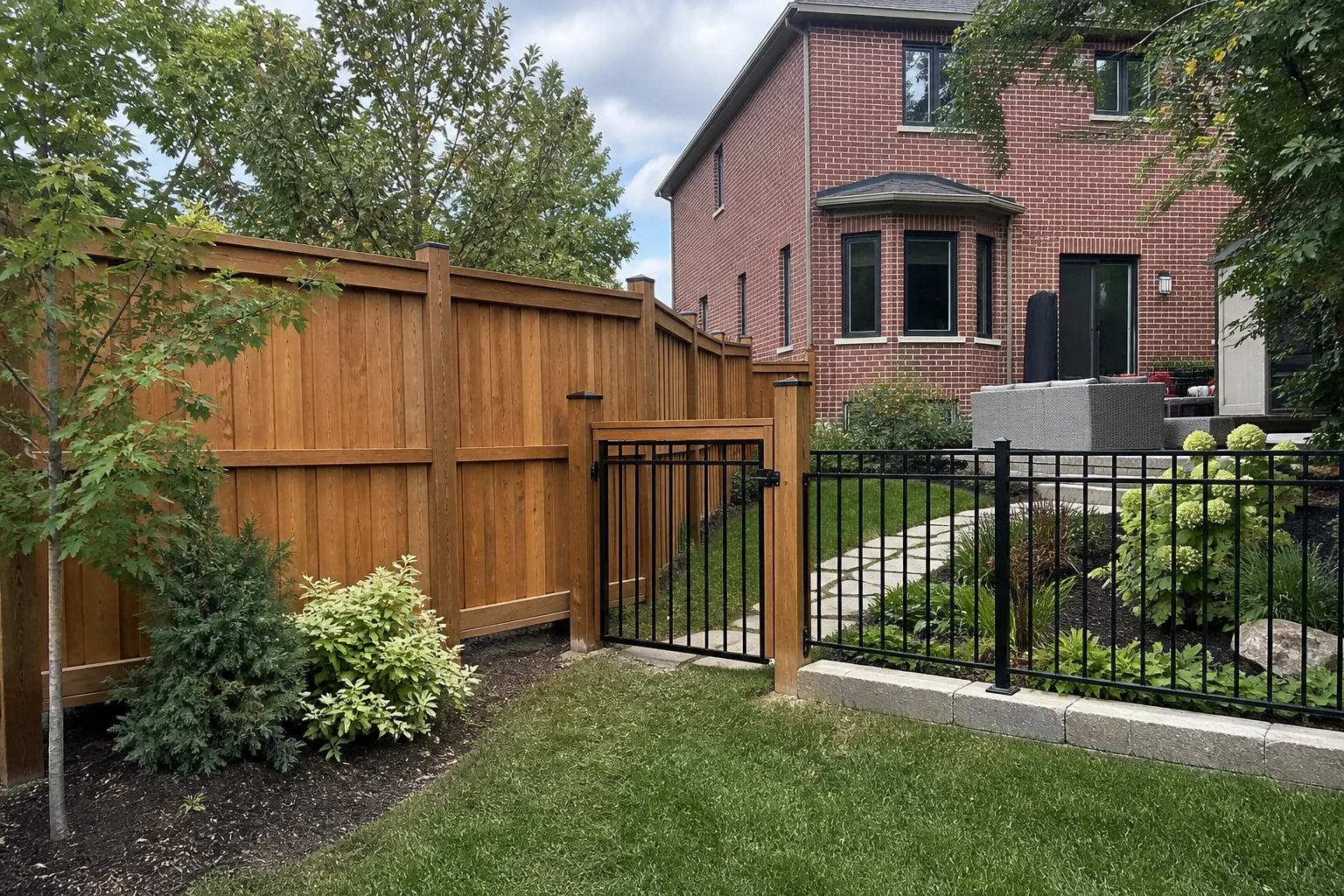
Mixed designs can combine a solid privacy section with open metal elsewhere. Review actual products and warranties rather than assuming every material in a category performs the same.
| Material | Useful strengths | Ownership considerations |
|---|---|---|
| Wood | Natural appearance and customization | Weathering, finishing, board movement |
| Vinyl | No wood staining and consistent panels | Expansion, impact, wind, product-specific repair |
| Metal | Open views, durable finish, pool applications | Less privacy and system-specific corrosion care |
| Mixed | Purpose-specific privacy and openness | More transitions and coordinated detailing |
Account for Winter, Wind, and Grade
Solid panels catch more wind than open designs and need foundations, posts, connections, and spacing suited to the system and site. Snow storage, plowing, drifting, and repeated freeze-thaw conditions affect fences near driveways and exposed yards.
On a slope, decide whether the top should step or follow grade. Large gaps under panels can undermine pet containment and appearance, while burying materials or blocking drainage creates other problems. Resolve each change in elevation on the plan.
Design Gates for Real Use
A gate needs enough width for regular movement, bins, lawn equipment, pool service, and future construction access. Very wide gates can be heavy and place greater demands on posts and hardware. Double gates or a dedicated service access may be more appropriate.
Confirm swing direction, latching, clearance over grade, snow, and nearby stairs or walkways. Pool gates require particular attention to applicable enclosure and self-closing or latching rules.
Protect Privacy Without Closing the Yard
A full-height solid fence is not the only privacy tool. Use taller coverage where neighbouring views are closest, then transition to a more open condition where distance or planting provides separation. A deck-level screen can protect a seating area more directly than increasing every property-line panel.
Combine the fence design with privacy screens and planting so the result has depth. This approach can feel more intentional and provide better coverage at the heights that matter.
Confirm Boundaries, Bylaws, and the Installed Scope
Do not assume an existing fence identifies the legal property line. Survey information, easements, utilities, shared ownership, and municipal rules can affect placement. Fence and pool enclosure requirements vary by municipality and may change.
A complete proposal should identify demolition, disposal, post system, panel material, fasteners, gates, hardware, transitions, grade assumptions, and cleanup. Ask how damaged individual components can be repaired later.
Use More Than One Fence Condition When It Helps
A property does not need the same solid panel on every edge. A tall wood fence may provide privacy beside the lounge, while a more open metal fence preserves a garden view or satisfies a specific enclosure role. The transition between them should align with a gate, planting bed, column or change in grade so it feels intentional.
Mixed systems can also control cost and maintenance by placing higher-privacy materials only where they create value. Keep the palette disciplined: repeat post colours, cap details or gate hardware so each condition belongs to the same landscape.
| Fence type | Strength | Consider carefully |
|---|---|---|
| Wood privacy | Natural appearance and custom sizing | Weathering, finishing, wind and ground clearance |
| Vinyl | No wood stain and consistent panels | Product quality, expansion, impact and repair method |
| Ornamental metal | Open views, durable finish and clear boundaries | Less visual privacy and grade transitions |
| Mixed material | Privacy where needed with openness elsewhere | Clean transitions and compatible posts or foundations |
Prepare a Fence Plan Before Setting Posts
Confirm the property information, utilities, easements, grade and local regulations before layout. Mark every gate and check its swing against stairs, bins, air-conditioning equipment, pool routes and winter snow storage. A gate that is technically wide enough can still be difficult to use if the approach turns sharply or the ground rises beneath it.
For pool enclosures, review the current municipal requirements as a separate safety scope. Do not assume a decorative garden fence or an existing neighbour fence satisfies them. Across the GTA, height, opening, gate and latch rules can differ.
- Verify boundaries instead of relying on the existing fence line.
- Locate utilities before excavation.
- Size service gates for equipment that may need future access.
- Plan stepped or sloped panels deliberately across grade changes.
- Keep wood and posts detailed for drainage and ground clearance.
Common questions
Which fence material handles Ontario winter best?
There is no category-wide winner. Product quality, post system, installation, drainage, wind exposure, impact, and maintenance influence performance more than the label alone.
Is wood or vinyl better for privacy?
Both can provide solid coverage. Wood offers customization and natural character; vinyl avoids wood finishing but has product-specific expansion, impact, and repair considerations.
Do I need a permit for a fence in Ontario?
Rules are municipal and may differ for property-line, corner, front-yard, retaining, and pool enclosure conditions. Confirm the current bylaw for the property.
Can I combine wood and metal fencing?
Yes. It can provide privacy in selected areas while preserving views elsewhere. Coordinate post rhythm, colours, gate hardware and transitions so the materials read as one design.
How wide should a backyard gate be?
It should fit regular foot traffic plus bins, lawn equipment, pool service and any anticipated construction access. The approach, swing, grade, post strength and hardware matter as much as the clear width.
Choose a Fence Around the Whole Property
We can coordinate privacy, gates, grade, materials, decks, pools, and planting instead of treating the fence as an isolated boundary.
