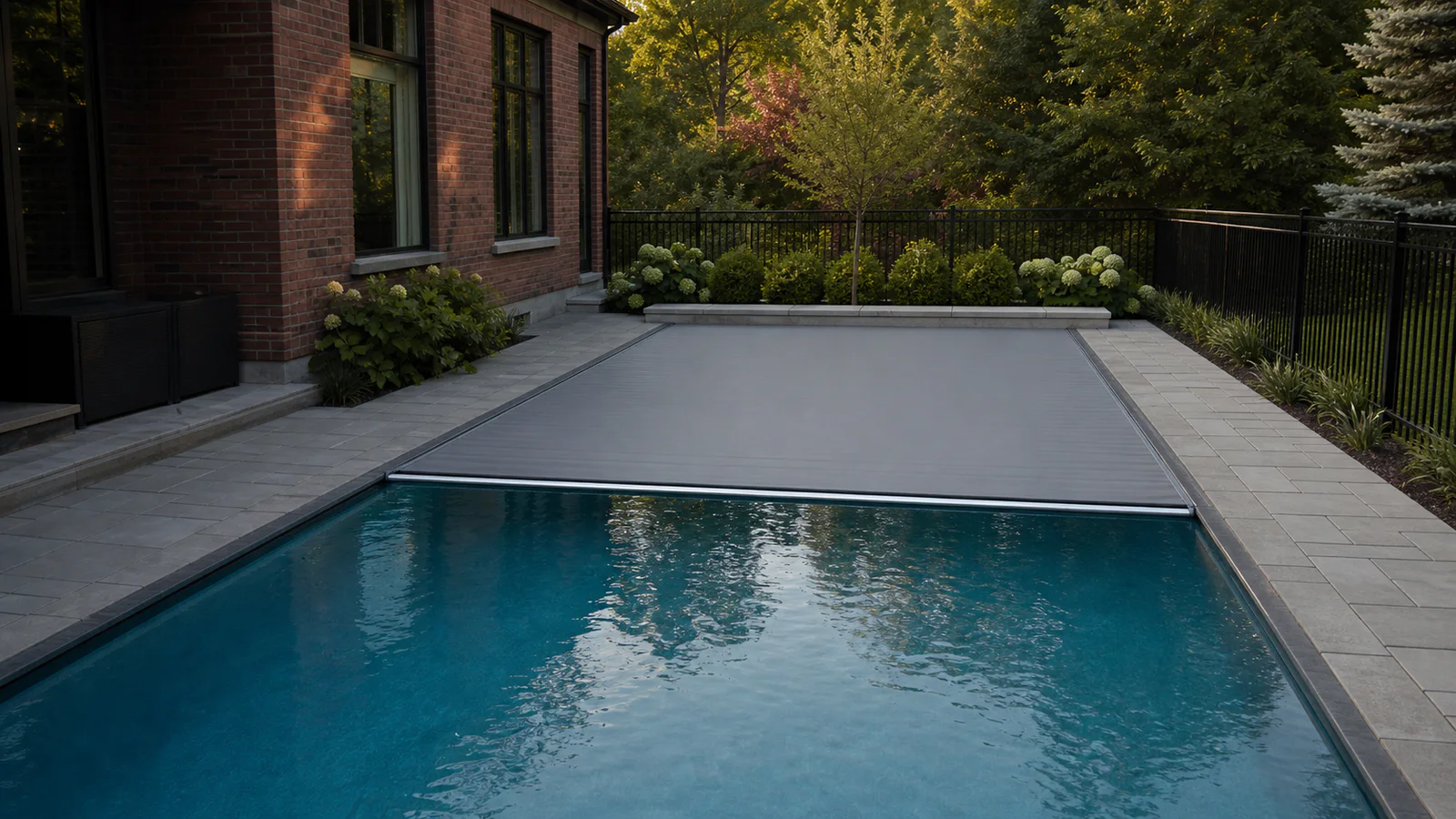
Grey automatic pool cover operating in straight tracks beside an Ontario brick home

AUTOMATIC POOL COVERS IN TORONTO & THE GTA

Automatic Pool Covers Integrated From the Start

Straight tracks, a clean recessed housing, compatible coping, drainage, electrical planning, and clear operating expectations designed with the pool rather than added as an afterthought.


Get a Pool Cover Estimate Compare Cover Systems
wsib insured
licensed and insured
transparent pricing
built for ontario climate
10 year workmanship
5 star rated

A SAFETY COVER IS A WORKING MECHANICAL SYSTEM

Design the Pool Geometry Around the Cover

An automatic cover can place a physical barrier over the water, reduce evaporation and debris, and make covering a pool convenient enough to become part of the daily routine. Those benefits depend on correct product selection, alignment, support, drainage, operation, inspection, and maintenance.

The cleanest installations are coordinated while a new pool and coping are being designed. Existing rectangular pools may also support retrofit options, but geometry, deck condition, clearances, electrical service, track location, and mechanism housing need an on-site review.

Get a Pool Cover Estimate

Safety Standard
Confirm the selected cover’s current ASTM F1346 compliance and installation requirements.

Pool Geometry
Straight parallel tracks and compatible ends make operation and concealment more predictable.

Daily Responsibility
Remove standing water, control access, inspect the system, and fully uncover before swimming.

CONVENIENCE DOES NOT REMOVE CARE

Plan Tracks, Housing, Drainage, Power, and Operation

A cover system includes fabric, webbing, ropes, tracks, a leading bar, roller and drive mechanism, controls, housing, lid, drainage, and often a cover pump. Every component needs access for inspection and future service.

Design and Installation

  • Confirm pool shape, track alignment, mechanism end, clearances, coping, and lid details.
  • Provide the required electrical supply, controls, bonding, drainage, and service access.
  • Coordinate ladders, handrails, steps, spas, water features, raised walls, and cover travel.
  • Select fabric colour, housing type, deck finish, and retrofit or new-build approach.

Use and Maintenance

  • Keep unauthorized users away from the controls and close the cover when intended.
  • Remove standing water with the specified pump and keep the pump and cord serviceable.
  • Inspect fabric, webbing, ropes, tracks, fasteners, lid, drainage, and mechanism.
  • Fully uncover before anyone enters the pool and follow chemical and seasonal instructions.

CHOOSE VISIBILITY, ACCESS, AND RETROFIT SCOPE DELIBERATELY

Recessed or Deck-Mounted Cover?

The preferred system depends on whether the pool is new or existing, its geometry, coping, surrounding deck, and the visual result you expect.

Recessed Cover System

  • Mechanism roll is concealed in a housing at one end of the pool.
  • Under-track or flush details can minimize visible hardware on compatible new pools.
  • Requires early coordination with pool walls, coping, structure, drainage, and lid.
  • Housing must remain accessible and drain correctly for service and durability.
  • Usually provides the most integrated architectural result.

Best fit: new pool projects where the cover can shape geometry, coping, utilities, and construction details from the start.

Deck-Mounted or Retrofit System

  • Tracks and mechanism can be installed above an existing deck in compatible conditions.
  • Avoids some invasive new-construction recess details.
  • Hardware is more visible and deck condition or clearances may limit options.
  • Existing coping, pool shape, ladders, obstacles, and electrical service require review.
  • Can add automatic operation to some pools that were not originally designed for it.

Best fit: compatible existing rectangular pools where practical operation matters more than fully concealed hardware.

WHAT SHAPES THE ESTIMATE

Pool Cover Cost Depends on More Than Fabric Size

Pool dimensions, cover type, tracks, recessed housing, coping integration, electrical work, drainage, controls, access, retrofit modifications, fabric, and site repairs all affect the installed system.

Request a Detailed Estimate

New Pool Integration

Pool geometry, track type, recess, mechanism, lid, drainage, power, controls, coping, cover pump, colour, and commissioning.

Existing Pool Retrofit

Measured opening, deck and coping condition, obstacles, clearances, electrical supply, visible hardware, removals, repairs, and service access.

Our approach: specify the product, safety classification, installation type, operating controls, cover pump, included electrical or masonry work, and future service access in writing.

AUTOMATIC POOL COVER FAQS

Safety and Ownership Questions Worth Asking

An automatic cover is useful only when it is the right product, installed correctly, operated every time, and maintained as instructed.

Ask About Pool Covers
Only a product that is identified and certified for the applicable safety-cover standard should be represented that way. ASTM F1346 establishes performance and labelling requirements intended to reduce access to the water by young children when the cover is correctly installed and used. Confirm the exact product and current documentation.
Do not assume it can. Toronto requires a swimming pool enclosure that complies with its fence bylaw for outdoor pools, while certain permanently attached lockable hot-tub or spa covers have a specific exception. Other Ontario municipalities have their own rules. Confirm current requirements for the address before designing the yard.
No one should use the cover as a walking or play surface. Manufacturer warnings commonly state that standing water must be removed, the cover must be fully removed before swimming, and walking on it should occur only in an emergency. Proper supervision and barriers remain essential.
Covering the water reduces evaporation and can reduce heat loss associated with evaporation. Actual energy and water effects depend on cover use, weather, pool temperature, wind, leaks, equipment, operating season, and how often the pool remains open. No universal savings percentage applies to every home.
Some existing pools can accept deck-mounted, top-track, under-track, or recessed retrofit approaches. Rectangular geometry is generally easier, while curves, raised walls, spas, ladders, coping, deck condition, clearances, utilities, and drainage can limit options. A measured on-site review is required.
That depends on the specific product, climate, snow and water loads, manufacturer instructions, pool operation, and winterization plan. Do not assume a daily automatic cover replaces a separate seasonal cover or can carry snow. Follow the selected system’s written cold-weather guidance.
Typical care includes removing standing water, keeping tracks and the mechanism housing clean, checking housing drainage, inspecting fabric, webbing, ropes, fasteners, lid, pump and cord, and arranging service when wear or unusual operation appears. Exact intervals and procedures come from the manufacturer.

Review the current ASTM F1346 safety-cover scope, the selected manufacturer’s operation and maintenance documents, and the City of Toronto pool enclosure requirements. Product certifications and municipal rules can change.

diamond decks and pools landscaping

PLAN THE COVER WITH THE POOL

Get Your Automatic Pool Cover Estimate

Tell us whether the pool is new or existing, its dimensions and shape, the coping and deck condition, and the level of integration you want. We will help identify a practical system and complete scope.

01

Measured Review

Confirm geometry, obstacles, coping, track location, recess, and clearances.

02

Complete System

Coordinate cover, mechanism, controls, power, drainage, pump, and access.

03

Clear Estimate

See included installation work, visible details, and service considerations.